Pro Painter USA
MILWAUKEE WI, USA,
November 16, 2026


The same square footage can lead to very different commercial painting estimates. A commercial painting cost per square foot is useful for early budgeting, but the rate depends on the surfaces being painted, not just the building’s floor area.
It’s reasonable to expect a larger property to cost more, but a warehouse exterior and an office interior can involve very different work. Surface condition, preparation, coating choices, building height, and access all affect the scope. Estimates are most useful when they specify the paintable surface area and project type.
This guide explains how square-foot estimates are measured, how property type affects pricing, and which project conditions can change the total. A project-specific price depends on the surfaces, preparation, coatings, access, and building use, and is provided after a quote request. With those factors in view, you can better understand what an estimate covers and how to plan for a commercial painting project.
• Use paintable surface area, not just the building’s floor area, to make sense of a square-foot estimate.
• Compare interior and exterior work separately, since property type and access needs can change the scope.
• Look for preparation, coating choices, and surface repairs in the estimate because they affect the work required.
• Learn how a professional project assessment can help clarify the scope before commercial painting begins.
Exterior work may require additional surface preparation and height-related access, while interior scope varies with rooms and ceilings. Compare estimates by paintable surface area and included work, not by building floor area alone.
Exterior work may include washing, sealant, stucco repairs, or waterproofing in addition to painting. These tasks address surface conditions that paint alone cannot correct. A first-time paint job may need more preparation if the exterior is unfinished or damaged. Repainting may require removing loose coating and repairing surfaces before applying new paint. The work depends on the building’s condition and the project scope.
For example, a stucco wall may need patching before coating, while exposed joints may need sealant. Washing removes dirt that could interfere with application. To manage costs, group compatible exterior areas into one project and specify which repairs, washing, and protective treatments the estimate includes.
Property type affects the surfaces and access involved. An office may include walls and ceilings, while retail work may focus on customer-facing areas. A self-storage facility or warehouse can have extensive exterior walls and hard-to-reach sections. Height, surface condition, and access requirements help explain why different project types do not share one standard rate.
Commercial painting cost per square foot is most useful when comparing similar work. Separate interior and exterior painting, then compare paintable area, number of coats, preparation, and included repairs. Repainting does not have one fixed cost difference from first-time painting: the existing coating’s condition, required preparation, and scope determine the additional work.
Estimates may include business overhead and profit alongside project-specific labor, materials, equipment, and site setup. A tall exterior or warehouse interior with high ceilings may need different access equipment than an office with clear, reachable walls. These details affect the work plan and should be stated in the estimate.
Compare quotes by matching surface areas, preparation, coatings, access, cleanup, and repair tasks. Request a written breakdown that identifies exclusions, so washing or stucco repairs aren’t mistaken for included work. Permits, safety measures, and insurance requirements vary by location and project conditions, so the estimate should account for applicable site needs. Scheduling related areas together can reduce repeated setup and help manage project costs.
A useful estimate starts with the surfaces to be painted, then accounts for finish, preparation, and access. Project size helps define the scope, but floor area alone doesn’t show how much wall or ceiling surface needs coating.
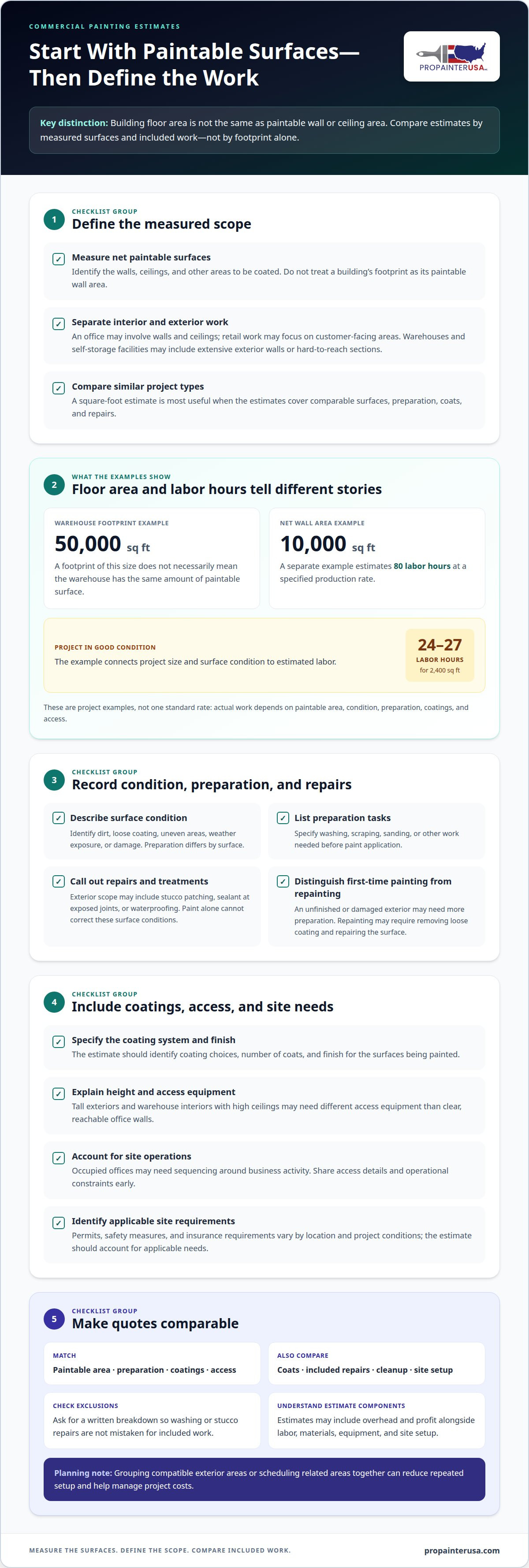
A professional estimate defines the work area, surface condition, coating system, and access needs. The painter measures net paintable surfaces rather than treating a commercial building’s footprint as its wall area. The scope then accounts for preparation, washing, coats, finish, setup, application, and cleanup. This makes estimates easier to compare because each describes the work included.
A project price depends on paintable area, preparation, coatings, access, and project conditions, and is provided after a quote request.
Project size examples show why floor area and paintable area must remain distinct. A warehouse with a 50,000-square-foot footprint doesn’t necessarily have 50,000 square feet of paintable surface. A separate example uses 10,000 square feet of net wall area and estimates 80 labor hours at a specified production rate.
For a 2,400-square-foot project in good condition, the estimate uses 24 to 27 labor hours. These examples help explain how surface measurements and site conditions shape the work, rather than treating every square foot of floor space as paintable.
Example budgets are useful when their scope resembles the project being planned. A 1,000-to-5,000-square-foot interior differs from a large or multi-story exterior because preparation, height, and access change the work. Combined interior and exterior projects also involve separate surfaces and coating requirements.
For a meaningful comparison, align the measured area, preparation, finish, access, and included cleanup. A written scope makes exclusions visible and supports clearer planning.
Timeline and accessibility affect how the work is organized. Occupied offices may require sequencing around business activity, while exterior work can depend on safe access to each surface. Sharing site access details and operational constraints early helps define the work plan. For a commercial painting project, discuss the scope with Pro Painter USA.
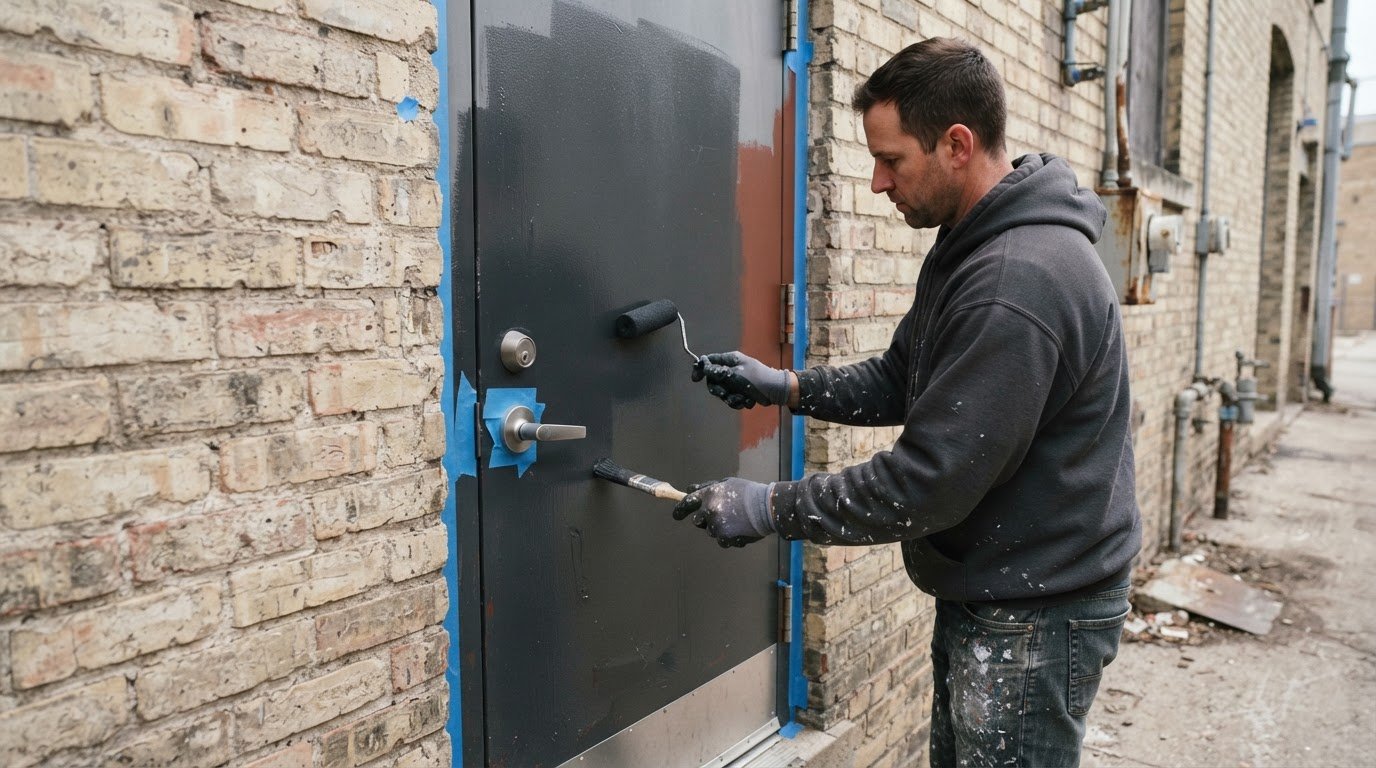
Surface condition, coating choice, and access all shape the scope of commercial painting. Preparation and repair work depend on the area and tasks involved. Lead paint removal is scoped separately because its method and extent affect labor, containment, and disposal needs.
Surface preparation readies existing walls and other paintable areas for a new coating. Paint applied over dirt, loose material, or an uneven surface may not produce a consistent finish. A professional painter assesses each area and identifies any washing, scraping, sanding, or other preparation needed before application.
For example, a warehouse exterior exposed to weather may need more washing than a clean office interior. The estimate should describe preparation by surface rather than assume every wall needs the same treatment.
Surface repairs address damage that would affect the finished appearance or coating adhesion. Their cost depends on the type, extent, and location of the damage, so a small patch and widespread deterioration require different scopes.
Cracks in stucco, damaged drywall, and peeling paint each call for different preparation. A professional assessment separates patching from painting and identifies where repairs are needed. This keeps the estimate clear about which surfaces receive repairs and which receive coating only.
Coatings also affect the work plan. Commercial painting commonly involves two coats, and the selected product’s coverage and requirements influence material quantities. Specialized coatings may require additional preparation or application steps, so estimates should identify the coating system and the surfaces it covers.
Access matters, too. High ceilings or exterior walls above two stories may require additional equipment and setup. A professional painter considers building height, obstacles, and site exposure when planning application and movement between work areas.
To compare estimates, match the preparation, repairs, coating system, number of coats, access equipment, and cleanup. If lead paint removal is included, its area and required work should be clearly separated from standard surface preparation and painting.
Property type shapes pricing because each building has different paintable surfaces, access needs, and finish requirements. An average rate is useful only when the measured area and project scope match. A warehouse exterior, office interior, and retail space are not equivalent painting projects.
Offices may include interior walls, ceilings, trim, and shared areas. Retail projects can involve customer-facing spaces, where work sequencing and a consistent finish matter. A self-storage facility often combines repeated exterior sections with doors and other details. In each case, the estimate depends on surface condition, preparation, coating choice, and access.
Separate walls, ceilings, and trim in the scope. Occupied work areas can affect how the project is sequenced.
Identify customer-facing areas and exterior surfaces separately. Their finishes and access needs may differ.
Account for repeated building sections, doors, and exposed exterior surfaces. The condition of each area affects preparation.
Consider tall walls and broad exterior surfaces. Building height and access can change equipment and labor needs.
For useful comparisons, check that each estimate uses the same basis: net paintable surface area, not floor square footage. Then compare included preparation, coats, coatings, repairs, access, and cleanup. A square-foot rate without these details can obscure the work behind the total.
Commercial painting cost per square foot therefore depends on both property type and what the rate measures. Assess interior and exterior areas separately, especially when a project combines an office interior with warehouse exterior work. This breakdown shows which surfaces drive the scope and supports clearer comparisons between estimates.
Before approving a proposal, review its scope by building area and finish. Confirm that repeated surfaces, doors, ceilings, and access needs are described consistently. This practical comparison helps businesses understand how property-specific requirements shape pricing without treating one average as right for every commercial building.
Pro Painter USA helps commercial property owners in Milwaukee and surrounding Wisconsin communities plan painting around each building’s surfaces, condition, and access needs. Whether your project involves interior spaces or exterior walls, a clear scope explains what the work includes and which factors shape the estimate.
Turn to Pro Painter USA when you’re ready to move from general cost ranges to a project-specific discussion. Details such as the areas to be painted, current surface condition, desired finish, and site access help define the work and clarify how the project will be planned.
Use commercial painting cost per square foot as an early planning reference, then define what a successful result should look like for your property. Consider how the finished space needs to support daily operations, whether you’re refreshing customer-facing areas, maintaining a professional workplace, or improving the building’s exterior.
Pro Painter USA provides commercial interior painting, along with residential interior and exterior painting. A project discussion can help connect your priorities with the painting scope and the areas that need attention. Sharing the property type, intended surfaces, and desired finish gives the conversation a practical starting point.
When you’re ready to discuss your painting project, contact Pro Painter USA. A clear plan is a confident first step toward a refreshed property.
The rate varies with paintable area, surface condition, coating system, and access needs. For a useful comparison, make sure each estimate covers the same surfaces and scope. A rate based on walls alone isn’t directly comparable to one that also includes ceilings, trim, or repairs. Divide the proposed total by the net paintable area to calculate the per-square-foot figure.
Yes. Heavily soiled surfaces may need more washing or mechanical preparation, while damaged areas can require patching or other repairs before painting. Peeling coating, for example, needs attention before a new finish can be applied. The additional preparation depends on the surface and the work needed to ready it, so estimates should distinguish repairs and cleaning from paint application.
Yes. Exterior work above two stories and tall warehouse interiors may require extra time and access equipment, such as lifts. Narrow access, obstacles, and surface location also affect setup and movement. A high ceiling above active work areas, for example, may require a different sequence than an unobstructed wall. These needs affect the project scope.
There isn’t one rate that suits every commercial painting project. The price reflects measured paintable surfaces, preparation, selected coatings, coats, labor, access, and project overhead. Compare estimates only after aligning those details. A proposal should clarify whether its square-foot figure covers walls alone or also includes ceilings and trim, and what preparation is included.
A gallon covers about 300 square feet on most smooth surfaces. That estimate is a starting point, not a universal coverage rate for every commercial job. The specified product’s data sheet gives the relevant coverage guidance, and the number of coats affects the quantity needed. A textured or uneven surface may require a different estimate than a smooth wall.
A warehouse repaint has no single total because paintable exterior area, surface condition, height, access, and coating requirements shape the scope. A large building footprint doesn’t equal its paintable wall area. The estimate should measure the surfaces to be painted and account for any washing, repairs, or access equipment needed. These details determine the work involved and the project estimate.
You might find these helpful:
We are a team of interior and exterior painters and we are not limited to house painting only. We can paint different businesses like retail shops, commercial buildings, and apartments.
We also provide restaurant painting services. We can give you more information about these services if you give us a call.