

Pro Painter USA
MILWAUKEE WI, USA,
October 27, 2026


Square footage is only the starting point for estimating deck staining and sealing in Wisconsin. A deck staining cost calculator Wisconsin homeowners use can help frame the project, but the final price depends on the deck’s size and condition, preparation needs, and details such as stairs and railings. A project-specific price is provided after a quote request, with these factors shaping the scope.
It’s reasonable to want a clear estimate before planning the work. This article explains which project details affect the total, how labor and preparation shape quotes, and what can change the timeline. You’ll also learn how to interpret a calculator estimate and where professional painting and staining fit when your deck needs careful surface preparation and a refreshed finish.
• Deck condition shapes the prep work: cleaning may be enough for a sound finish, while stripping and sanding can add to the scope.
• Include stairs, railings, and other detailed surfaces in your measurements so the estimate reflects more than the deck floor.
• Compare estimates by checking what preparation, stain application, and sealing include, as well as which potential costs are excluded.
• Labor needs and project conditions affect timing; understanding the work sequence helps you plan the project more confidently.
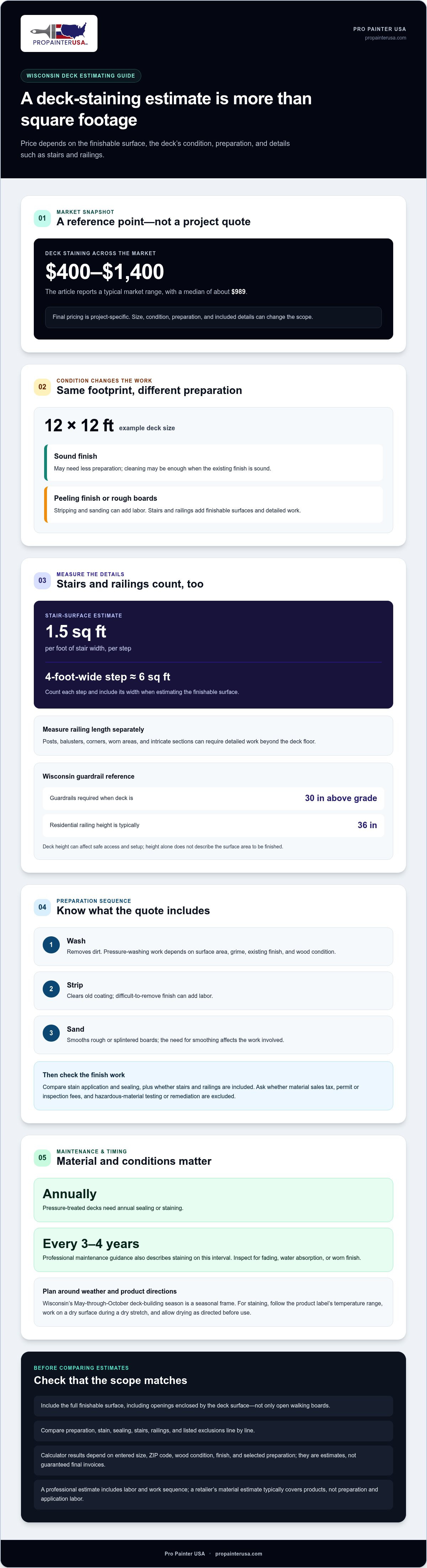
Preparation is the cleaning and surface work needed before a new finish can adhere. Washing removes dirt, stripping clears old coating, and sanding smooths rough or splintered boards. Pressure washing costs depend on the surface area, while the actual work depends on grime, existing finish, and wood condition. Stripping or sanding adds labor when old finish is difficult to remove or boards need smoothing. Washing and stripping, or washing and sanding, combines preparation steps; washing, stripping, and sanding requires all three. An estimate should list these tasks separately because they affect labor and project scope.
Decking material is the wood or composite used to build the walking surface. These are deck-building figures, not staining prices.
Cedar and redwood decks use naturally durable wood. Final construction estimates vary with size, design, and labor, so don’t treat material cost alone as the project total.
Staining frequency depends on the wood and its exposure to Wisconsin weather. Pressure-treated decks need annual sealing or staining; professional maintenance guidance also describes staining every 3 to 4 years. Inspect the surface for fading, water absorption, or worn finish to judge whether maintenance is due.
Season and temperature affect drying and finish performance. Wisconsin’s May-through-October deck-building season provides a practical seasonal frame, but staining should follow the product label’s temperature range. Choose a dry stretch, work on a dry surface, and allow the coating to dry as directed before use.
Deck height is the distance between the deck surface and the ground. A raised deck can take more setup to reach safely, while its height alone doesn’t describe how much surface needs finishing. Wisconsin deck guardrails are required when a deck is 30 inches above grade, and residential railings are typically 36 inches high. Include the deck’s height and layout when describing the project.
Railings are barriers around open deck edges. Their posts, balusters, and corners add surfaces that need careful, detailed work beyond the main decking. A simple, sound railing requires a different amount of labor than worn or intricate sections. Measure railing length separately from floor area so the estimate accounts for both.
Stairs are the steps connecting a deck to the ground or another level. They increase the total finishable surface, and their edges can require more detailed application. A four-foot-wide stair step represents about 6 square feet of stained surface. The calculation uses 1.5 square feet per foot of stair width per step, so count each step and include its width.
Detail work means coating smaller or harder-to-reach components, including railings and stairs. A deck staining estimate should identify which details are included rather than treating the floor’s square footage as the entire project.
Footings are the supports beneath a deck, not surfaces included in the staining area. A deck calculator estimates one footing per 64 square feet, plus two additional footings. That count helps describe the structure, but staining scope depends on finishable surfaces and access. Railing material also matters: pressure-treated wood, composite, and other selections can have different profiles and surface conditions. Record the actual material and condition for a clearer regional estimate.
A useful estimate separates the deck’s size and condition from the work included. Compare preparation, coating, sealing, and exclusions before deciding whether two figures cover the same project.
An estimate is a written outline of the work and materials priced for a deck project. Check whether it includes washing, stripping, sanding, stain application, and sealing, and whether stairs and railings are included. Estimates may exclude sales tax on materials and supplies, permit or inspection fees, and hazardous-material testing or remediation. When comparing warranties, review their written terms alongside the listed preparation and finish work.
A sample estimate applies a project’s measured area and condition to its planned work. Across the market, deck staining typically ranges from $400 to $1,400, with a median of about $989. A sound 12-by-12-foot deck may need less preparation than the same-size deck with peeling finish, rough boards, stairs, and railings. Larger surface area and added restoration change the estimate.
An estimate is a project-specific calculation, not a guaranteed final invoice. A calculator’s result depends on the entered deck size, ZIP code, wood condition, finish, and selected preparation. Measure the full finishable surface, including openings enclosed by the deck surface, rather than only the open walking boards. Compare the actual scope line by line; permit and inspection costs or material taxes may be outside the estimate.
A professional estimate accounts for labor and the sequence of preparation, staining, and sealing, while a DIY budget centers on materials and the homeowner’s work. Stain and sealer material costs vary by product, coverage, coats, and wood condition; a project-specific price is provided after a quote request. Staining colors and protects wood, clear sealing adds protection without stain color, and deck paint creates a different finish. Compare the scope rather than treating them as identical options.
Labor rates are hourly charges for work performed by a crew or trade professional. A deck’s framing condition, treated wood, access, and finish preparation affect the labor required for its specific scope.
A contractor quote is a project estimate describing the included work, labor, and materials. A retailer’s material estimate typically covers products, not the labor needed to prepare, apply, and finish a deck. Compare quotes using the same surface area in square feet, and check whether cleaning, stripping, sanding, stairs, and railings are included. Matching the scope makes differences easier to understand than comparing totals alone.
General contractor overhead covers coordinating and supervising work beyond hands-on labor. A supervising contractor may add a markup to the estimated project total, so review how the estimate separates supervision from crew work. Clarify whether the schedule includes drying time between preparation, stain application, and sealing. Weather and the deck’s condition affect the sequence, so a fixed workday count isn’t useful without knowing the scope.
Project timeline means the period from work start through completion. Wisconsin deck construction typically takes 1-4 weeks from start to final inspection, but that duration describes construction, not staining alone. For staining, the schedule depends on surface preparation, drying conditions, and the number of steps involved. A professional crew builds roughly 150 square feet of deck per day, another construction benchmark, not a staining production rate. For a tailored staining scope, request a deck staining quote.
Pro Painter USA provides residential and commercial painting for Wisconsin properties. After planning deck maintenance, homeowners may also be considering refreshed exterior paint for nearby doors, windows, or other painted surfaces. Pro Painter USA handles residential exterior painting, as well as interior painting for homes and commercial properties.
Painting and deck staining are distinct projects with different surfaces and finishes. If your plans include painting the house exterior alongside deck upkeep, Pro Painter USA can help with the painting portion. Contact Pro Painter USA to discuss your property’s painting needs.
Use a deck staining cost calculator Wisconsin homeowners can access as a planning tool, then turn the estimate into a clear project scope. Consider whether deck maintenance fits into a broader property refresh, such as updating painted surfaces indoors or outside. Pro Painter USA offers staining, Residential Interior Painting, Residential Exterior Painting, and Commercial Interior Painting.
For deck work, the price depends on the project and is provided after a quote request; deck size, surface condition, preparation, and detailed areas shape the scope. Pro Painter USA can help plan staining alongside relevant painting needs, while keeping the services distinct.
When you're ready to discuss the work, contact Pro Painter USA for a quote. A thoughtful plan is a practical first step toward a well-kept property.
Whether labor is included depends on the estimate’s scope; permit and inspection fees may be excluded. A calculator estimate, for example, may separate labor from materials and leave local building department fees outside its total. Before using an estimate to plan a Milwaukee-area project, identify whether it covers surface preparation, application labor, materials, and any applicable permit or inspection charges.
Some estimates include materials and application labor, while others list material costs separately. Look for distinct lines for stain, preparation supplies, and labor, then check whether application and sealing are included. A materials-only figure won’t account for the work needed to prepare and coat the deck. Comparing the same scope makes estimates more useful side by side.
Contractors generally build project estimates around the surface area, preparation, finish, and labor involved. A straightforward deck with sound boards requires a different scope from one needing old coating removed or detailed railings finished. Ask for tasks such as cleaning, sanding, stain application, and sealing to be itemized. This clarifies what drives the total without relying on a single rate.
A single statewide per-square-foot average doesn’t capture differences in deck condition, preparation, or included surfaces. The deck staining cost calculator for Wisconsin should be treated as a planning aid, not a guaranteed local quote. On the market, deck staining typically falls between $400 and $1,400, with a median of about $989. That project range isn’t a per-square-foot rate or a Pro Painter USA price.
Deck size alone doesn’t determine a reliable total for a 200-, 300-, or 500-square-foot project. A larger deck has more surface to coat, but peeling finish, stairs, railings, and sanding also change the work involved. Measure the deck floor and note additional finishable areas separately. The price depends on the project details and is provided after a quote request, rather than inferred from area alone.
Size determines the basic area to coat, while condition determines how much preparation the wood needs. Height can affect access and setup, and stairs or railings add surfaces beyond the main deck floor. For a useful project description, note the decking material, worn or peeling areas, railing length, stair count, and whether the deck is elevated. Those details help define the work involved.
You might find these helpful:
We are a team of interior and exterior painters and we are not limited to house painting only. We can paint different businesses like retail shops, commercial buildings, and apartments.
We also provide restaurant painting services. We can give you more information about these services if you give us a call.


