Pro Painter USA
MILWAUKEE WI, USA,
November 27, 2026


A fresh coat of paint shouldn’t bring business to a standstill. Preparing a commercial space for painting with less disruption starts with a site walk-through, clearly defined work zones, protected furniture and equipment, and a schedule built around daily operations. Painters then clean and repair surfaces before painting, with work phased so other areas can remain in use.
It’s reasonable to want a smooth finish without unnecessary interruptions to staff, customers, deliveries, or essential work. The key is to plan access, protection, surface preparation, and timing together. This guide covers what painters typically prepare, how to protect furniture and equipment, and how phased scheduling can keep business moving. It also explains what to share before work begins, including busy periods, restricted areas, access needs, and surface concerns, so the plan fits the space and its daily use.
• Professional surface preparation addresses dirt, loose paint, cracks, and other defects before coatings go on.
• Phasing work around busy periods and business access can help limit interruptions to daily operations.
• Protecting floors, furniture, and sensitive equipment helps keep paint and preparation debris contained.
• Sharing access needs, restricted areas, and operational schedules in advance helps shape a practical work plan.
Before a commercial painting project begins, establish a surface plan: inspect, clean, repair, allow surfaces to dry, and select primer.
•
Have the painter inspect each surface and record its material, condition, and intended finish. Look for peeling paint, rust, loose material, cracks, holes, dents, loose drywall tape, failed window caulk, and water stains. Note where damage appears, such as a wall near a leak or exposed exterior trim. Address active leaks and moisture problems first, since paint alone won’t fix their cause. Before hiring, review lease and building requirements for approved colors, access, work hours, and required notices. Identify whether the project scope requires permits or approvals under applicable local rules.
•
Choose cleaning methods based on the surface and type of soil. Interior walls should be cleared of dust, grease, and stains; kitchen or cafeteria surfaces may need degreasing and rinsing. Exterior surfaces may need power washing, followed by enough drying time before coatings are applied. Schedule exterior washing at least one week before painting. Dirt, mildew, grease, and moisture can interfere with adhesion, so have the painter confirm that surfaces are clean and dry before work continues.
•
Ask the painter to remove loose or peeling material, fill holes and cracks, and sand rough patches smooth after repairs dry. Work may also include patching drywall, repairing trim, or replacing failed caulk where appropriate. A sound, clean surface gives coatings a better base and helps avoid uneven finishes or delays caused by overlooked repairs. Inspect existing paint for flaking, stains, and poor adhesion. Touching up damaged edges without preparing them can leave visible defects beneath the new finish.
•
Match primer and paint to the surface material, its condition, and how the space is used. Primer supports adhesion and can help conceal stains or dark colors; stain-blocking primer is suitable for water or nicotine stains after the underlying issue is addressed. For high-traffic areas, durable, washable finishes such as satin or semi-gloss can suit daily cleaning. Offices and conference rooms may suit eggshell or matte. Confirm color, finish, and surface coverage before work begins to keep the coating plan consistent.
Build the painting schedule around occupied areas, production demands, deliveries, and customer traffic. In shared properties, coordinate the work plan with building management and affected teams before crews begin.
Walk the site with operations and maintenance contacts. Identify business hours, tenant access, delivery routes, busy periods, and areas that cannot close. Name a primary point of contact and agree how schedule changes will be shared. This sets clear expectations for employees and helps prevent access conflicts or damage to work in progress.
In an occupied building, divide the project into zones so other areas can remain open. Schedule a reception area separately from offices, for example, and tackle shared corridors during quieter periods. Depending on traffic and building needs, work can take place during normal hours, after hours, on weekends or holidays, or during a company’s slow season.
Schedule high-priority, high-traffic work during planned slowdowns or off shifts where possible. Coordinate painting with deliveries, public access, and other building work, such as HVAC servicing or carpet replacement. For production areas, share operating constraints and restricted access early so crew movements and material deliveries don’t conflict with essential work.
Use temporary barriers and clear signage to direct staff and visitors away from wet paint. Post notices a week before work begins, then provide tenants with a reminder 48 hours before each painting phase. Include affected areas, timing, changed walking paths, expected noise, and any relocation needs. Keep walkways and emergency routes accessible throughout the work.
Cutting in around trim, corners, and door frames takes focused time; don’t treat it as a 30-minute task. Align this detail work with the zone schedule and allow the coating to dry before reopening nearby traffic routes. For a coordinated commercial painting plan, share operating hours and access constraints before scheduling begins.
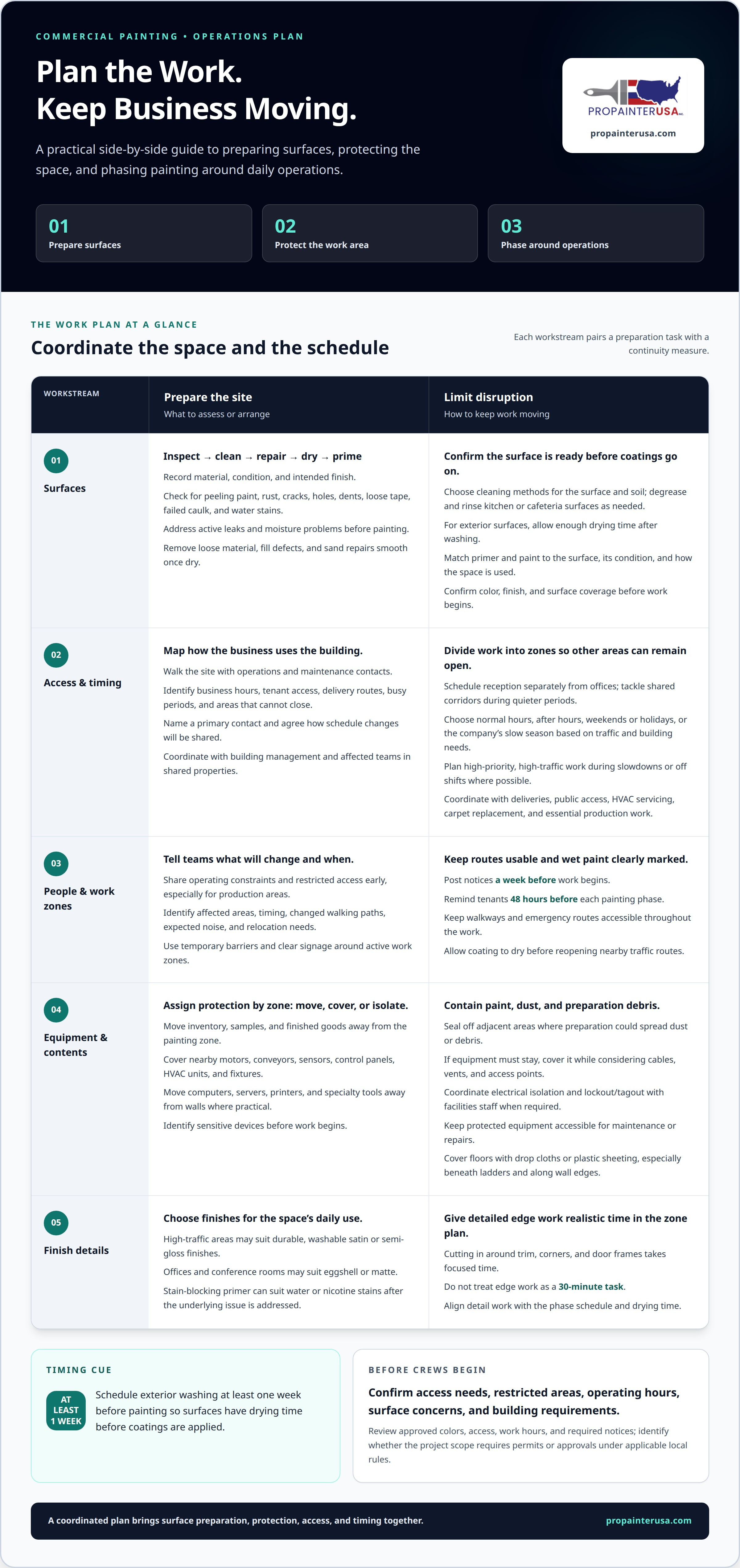
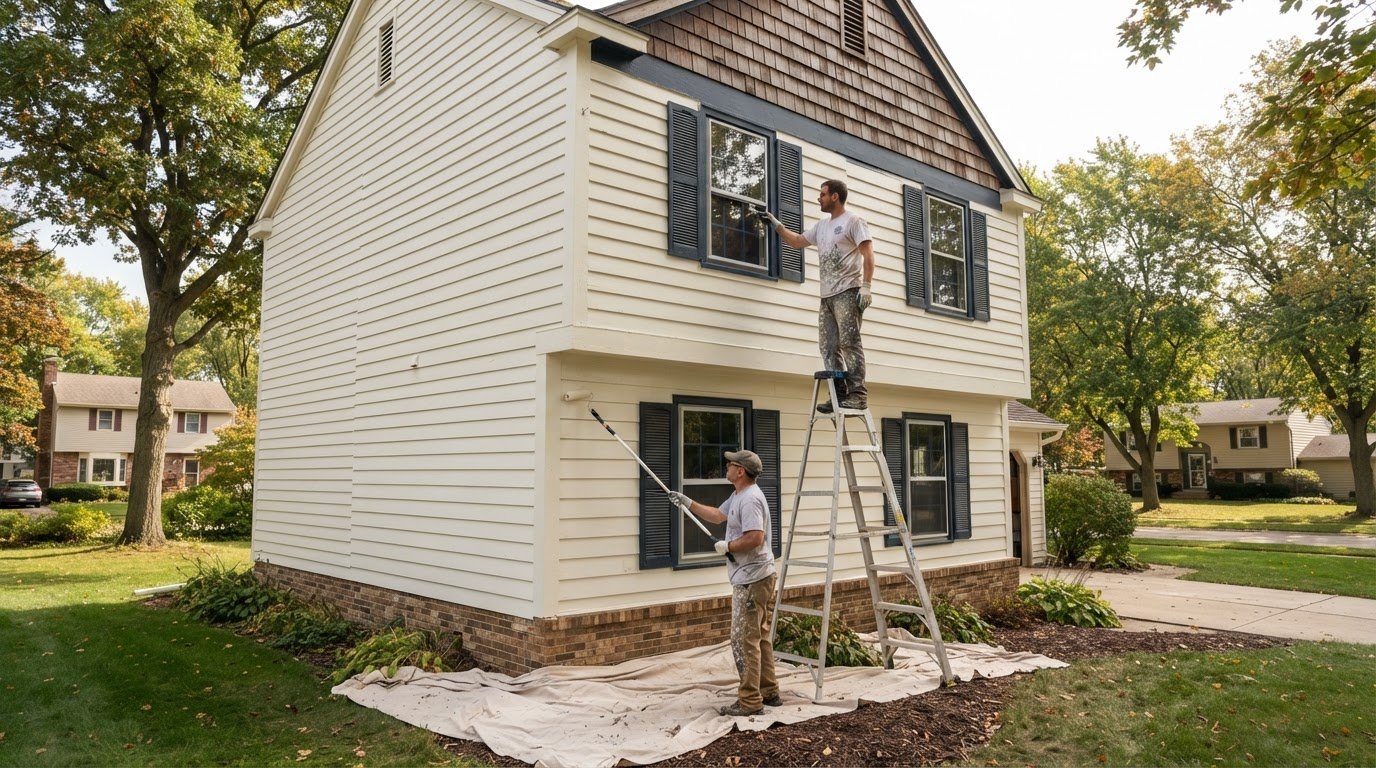
Before painting starts, assign protection by zone and identify items to move, cover, or isolate. This helps keep paint, dust, and preparation debris away from active work areas.
•
Move inventory, samples, and finished goods away from the painting zone. Cover nearby motors, conveyors, sensors, control panels, HVAC units, and fixtures with suitable temporary protection. Seal off adjacent areas where preparation could spread dust or debris. Have facilities staff coordinate electrical isolation and lockout/tagout when required, then confirm protected equipment remains accessible for maintenance or repairs.
•
Move computers, servers, printers, and specialty tools away from walls where practical. If equipment must stay, cover it while keeping cables, vents, and access points in mind. Identify sensitive devices before work begins so painters don’t move them unexpectedly. After covers are in place, check that technology is protected without blocking staff access.
Cover floors with drop cloths or plastic sheeting, especially beneath ladders and along wall edges. Move desks, chairs, and shelving where possible; protect fixed counters, lights, and door hardware. Check that coverings lie flat and don’t create trip hazards. A clear boundary around the work area helps keep paint and sanding dust off nearby surfaces.
Set ventilation needs before applying coatings, particularly in enclosed or poorly ventilated rooms. Consider low-VOC or zero-VOC paint where appropriate, and account for how vapors and particulates may affect occupants. The work plan may also address personal protective equipment, scaffold safety, and fall protection when needed. Keep occupied areas separated from active work zones.
Check coverings as work moves between zones, especially near doorways, shared corridors, and equipment in regular use. Replace shifted or damaged sheeting before continuing. At the end of each work period, confirm floors, fixtures, and nearby systems remain protected and that facility maintenance access is clear.
Organize each painting zone before crews arrive. A clear plan for desks, access routes, and phased work can reduce disruption and help employees know what to expect.
Have employees clear desktops, remove personal belongings, and move small electronics away from walls. Label items that should stay in place, such as shared department equipment. Move desks, chairs, and shelving away from the surfaces being painted, leaving painters room to work and keeping access clear.
Identify where crews can stage materials and where ladders or lifts can travel. Keep pathways clear between the loading area, work zones, and storage locations. In buildings with deliveries or public entrances, plan crew movement so equipment doesn’t obstruct regular traffic. For exterior work, keep necessary staff and visitor entrances in mind.
Schedule adjacent rooms or sections together where practical. Grouping them can reduce repeated setup and containment, while staggered crews can help prevent crowded corridors. Map the sequence for each zone and note which spaces remain open. This lets teams keep operating elsewhere instead of clearing the entire facility at once.
Coordinate each phase with department schedules and identify confidential workspaces or essential activities that need limited downtime. Share the sequence clearly, including affected areas and when access will change. Document agreed colors and finishes for each area so phased work follows the same plan throughout the facility.
Use barriers and signs to show employees and visitors where not to enter, especially near wet paint or equipment. Check that alternate paths remain usable and exits stay accessible. If you’re coordinating occupied commercial areas, discuss a painting schedule that accounts for work zones, access, and business operations.
Pro Painter USA provides commercial painting for businesses planning work in occupied or active spaces. Share the details that shape the project: which areas need painting, when they’re busiest, what access must stay open, and which equipment or furnishings need protection. This helps us plan around daily operations, work zones, and your preferred colors and finishes.
Whether your project involves interior or exterior surfaces, Pro Painter USA can assess the work and plan an approach suited to your property. If you’re organizing commercial painting in Milwaukee or nearby communities such as Wauwatosa, Oak Creek, or Menomonee Falls, request a complimentary estimate from Pro Painter USA.
Before work is scheduled, turn preparation decisions into a shared project plan. A single point of contact can keep operational updates, access changes, and decisions moving between your business and the painting team. If priorities shift, communicate the change early so the work sequence can adjust smoothly.
Preparing a commercial space for painting is also a chance to define a successful handoff. Clarify who will approve completed areas, how remaining touch-ups will be noted, and when each space is ready for normal use. These details help everyone finish with the same expectations.
Pro Painter USA provides commercial interior painting for businesses planning a refresh. Contact Pro Painter USA about your project to discuss the space and your plans. A clear starting point can help your next painting project move forward with confidence.
Preparing a commercial space for painting usually starts with a site assessment, followed by a surface and access plan. Painters identify what needs cleaning, repair, primer, or coating, then coordinate work zones with facility operations. For example, a production floor may need a separate sequence from offices. The plan also establishes staging areas and identifies spaces requiring restricted access.
Painters cover or relocate items near active work, while your team can clear personal belongings, wall décor, and small electronics beforehand. Gather loose desk items and label anything that must stay in place. Flag fragile objects, confidential materials, and inventory that should not be moved. For example, mark a fixed display cabinet “do not move” before the crew sets up.
Painters remove surface dirt and grease, then repair defects that could show through the finish. In a cafeteria, that may mean degreasing and rinsing walls; in an office, it may involve filling dents or patching loose drywall tape. They remove peeling paint and smooth rough areas after repairs dry. Rust treatment, caulking, or stain-blocking primer may also suit particular problem spots.
Painters plan ventilation around the work area, coating, and building use. Low-VOC or zero-VOC paint can be considered where appropriate, and a zone may be isolated until coatings flash off. HVAC fans may need to stay at a low setting to limit dust reaching wet paint. Include rooms without open windows and nearby occupied spaces in the site plan.
Coordinate painting with planned building work, such as HVAC servicing or carpet replacement, to avoid overlapping disruption. Provide operational calendars, delivery windows, tenant schedules, and dates when key rooms are unavailable. For example, schedule a conference room separately if it is used for planned meetings. A shared update plan also helps staff prepare for schedule changes.
Plan protective equipment and controls according to the work area, access, and potential exposure to vapors or particulates. Elevated work may call for scaffold safety and fall protection, while enclosed areas require attention to ventilation. Keep coating and solvent Safety Data Sheets accessible to the project team. The plan should also address paint waste, preparation runoff, and clear emergency routes.
You might find these helpful:
We are a team of interior and exterior painters and we are not limited to house painting only. We can paint different businesses like retail shops, commercial buildings, and apartments.
We also provide restaurant painting services. We can give you more information about these services if you give us a call.