

MILWAUKEE WI, USA,
October 17, 2026


What if the best paint for Wisconsin weather depends as much on your siding and the day you paint as on the can you choose? Freezing winters, humid summers, and repeated freeze-thaw cycles can challenge an exterior finish, so choosing a popular paint alone may not be enough.
It’s easy to get caught between conflicting advice about temperature, humidity, rain, and the right painting season. A durable result starts with matching the coating and primer to the surface, preparing that surface carefully, and applying the paint when conditions meet the manufacturer’s instructions.
This guide explains which paint characteristics matter in Wisconsin, how siding material affects paint and primer choices, and how preparation helps prevent early peeling. You’ll also learn how outdoor conditions shape the painting window and when professional surface assessment, repairs, and priming can help set an exterior project up for success.
• The best paint for Wisconsin weather depends on the home’s siding and exposure, not just the brand or label.
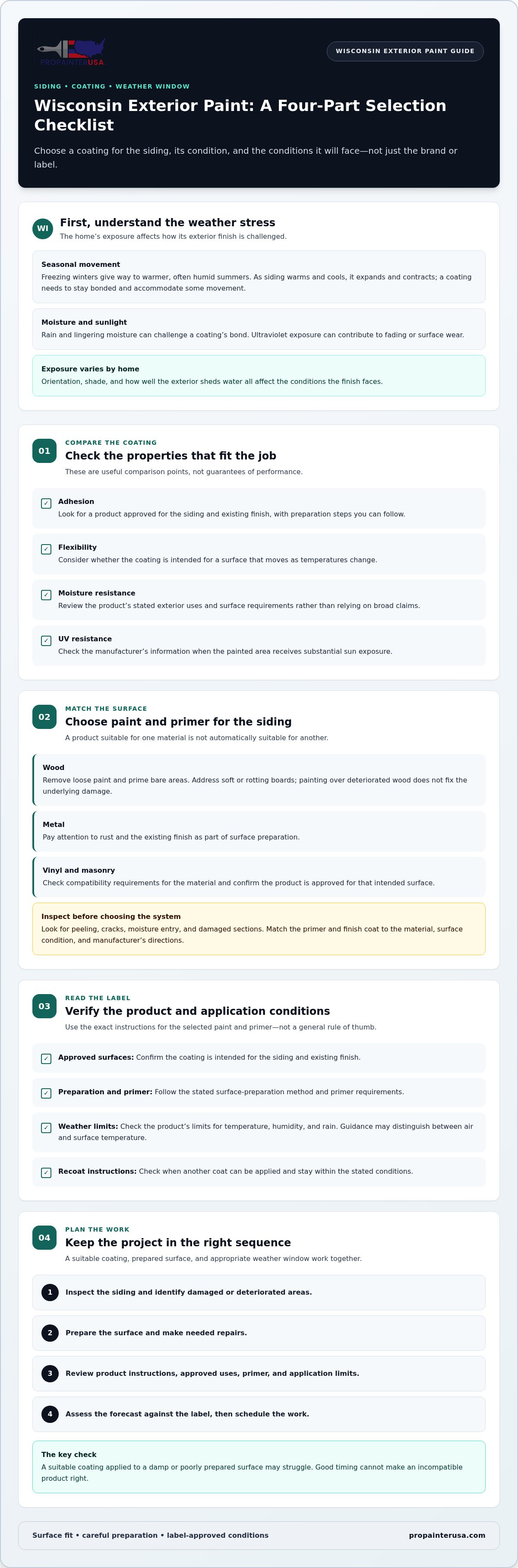
• Compare exterior paint by relevant properties such as adhesion, flexibility, moisture resistance, and UV resistance.
• Match paint and primer to the siding material, and follow the manufacturer’s guidance for approved uses and preparation.
• Plan in sequence: inspect the surface, prepare it, review product instructions, assess the forecast, then schedule the work.
• Professional surface assessment, repairs, priming, and finishing can address the specific needs of Wisconsin exteriors.
No single paint is best for every Wisconsin home or siding surface. The right choice depends on the exterior material, its current condition, and whether the coating is applied in suitable weather. A product that performs well on properly prepared wood may not be approved for vinyl or masonry, so check the label rather than relying on the paint category alone.
Wisconsin’s seasonal changes put exterior coatings through repeated stress. In Milwaukee and elsewhere in the state, freezing winters give way to warmer, often humid summers. Surfaces expand and contract as temperatures shift, while rain and lingering moisture can challenge a coating’s bond. Sunlight exposes paint to ultraviolet radiation, which can contribute to fading or surface wear. The degree of exposure varies by home, depending on its orientation, shade, and how well the exterior sheds water.
A reliable exterior finish starts with suitable surface preparation, a coating approved for that surface, and a weather window that meets the product label. Paint selection and application conditions work together. A suitable coating applied to a damp or poorly prepared surface may struggle, while good timing can’t make an incompatible product right for the siding. General background on types of exterior paint and their failure mechanisms, including cracking and chalking, helps explain why both formulation and application matter.
As siding warms and cools, it moves. A paint film needs to stay bonded and flexible enough to accommodate some of that movement; repeated expansion and contraction can add stress, especially where the coating is already compromised. Moisture may enter through gaps or damaged areas, and sunlight can gradually affect the exposed finish. Weather can contribute to coating problems, but it isn’t the only cause. Surface condition, preparation, compatibility, and application all play a part.
That’s why choosing the best paint for Wisconsin weather isn’t simply a matter of finding a label that mentions durability. Review the product’s stated uses and application directions, then consider how the home’s exposure and siding condition affect the choice.
Wood, metal, vinyl, and masonry each call for preparation suited to the material and a coating approved for its intended surface. Wood may need loose paint removed and bare areas primed; metal may require attention to rust or the existing finish. Vinyl and masonry have their own compatibility requirements. A product suitable for one surface isn’t automatically appropriate for another, so follow the manufacturer’s instructions for both primer and finish.
Before painting, look for peeling, cracks, moisture entry, or damaged sections that need attention. Painting over deteriorated wood won’t address the underlying damage. If you find soft or rotting boards, exterior wood rot repair in Milwaukee can help you understand why repairs belong in the preparation plan. Assessing the siding first makes it easier to choose a coating system suited to the home, rather than relying on a one-size-fits-all recommendation.
Exterior-grade paint is made for outdoor use, but that category alone doesn’t tell you whether a coating suits a particular home. Formulation describes what the paint is designed to do; brand names and terms such as “premium” don’t prove that it fits your siding or project. The best paint for Wisconsin weather is the one whose documented properties and approved uses match the surface and the conditions in which it will be applied.
Compare the coating against the demands of the project. Adhesion matters because paint must bond to a properly prepared surface. Flexibility can help the film accommodate movement in the material beneath it. Moisture resistance is relevant where rain or damp conditions are a concern, while UV resistance matters on areas exposed to strong sunlight. These properties are useful points of comparison, not guarantees. Performance also depends on surface condition, preparation, and following the product directions.
Look for a product approved for the siding and existing finish, with preparation steps you can follow.
Consider whether the coating is intended for a surface that moves as temperatures change.
Review the product’s stated exterior uses and surface requirements instead of relying on broad claims.
Check the manufacturer’s information when the painted area receives substantial sun exposure.
The product label and intended surface are more useful than any universal “best paint” claim because they connect the coating to the job it’s designed to do.
Start with the approved surfaces, then check whether the directions call for a particular primer or preparation method. Read the application conditions carefully, including any limits for temperature, humidity, or rain. Temperature guidance may distinguish between air and surface conditions, so don’t assume the air temperature alone tells you whether painting is suitable. Limits vary by product; follow the exact label instead of a general rule of thumb. Check recoat instructions, too. Applying another coat too soon or outside the stated conditions can affect the finish.
Primer isn’t a one-size-fits-all step. The right choice depends on the material, the surface condition, and the selected finish coat. Bare or repaired areas may need a different approach than sound, previously painted siding. Chalky surfaces and peeling areas also call for appropriate preparation before recoating; primer isn’t a substitute for removing loose material or addressing surface problems. Follow the manufacturer’s instructions for compatibility, preparation, and recoat timing so each layer is intended to work with the next.
A careful surface assessment helps determine the right system. Pro Painter USA’s exterior painting team can connect surface preparation and priming to the planned finish, with an approach tailored to the project rather than a generic product claim.
Start with the siding, not a favorite paint label. The best paint for Wisconsin weather is a coating approved for the material and suited to its condition, with preparation and application that follow the manufacturer’s directions. Use this comparison as a starting point, then check the specific product instructions before choosing.
| Surface | Key preparation | Paint-selection consideration |
|---|---|---|
| Wood | Check for moisture or damage, remove loose paint, and prepare bare or repaired areas for spot priming. | Choose an exterior coating approved for the wood and compatible with the existing finish. |
| Metal | Clean the surface and prepare it as directed for good adhesion; address deteriorated areas before coating. | Confirm the coating is approved for the specific metal and observe surface-temperature instructions. |
| Vinyl | Clean the siding and follow its surface-specific preparation directions. | Verify that the product is suitable for vinyl before application. |
| Brick and other masonry | Assess the condition and moisture, and prepare the surface according to product directions. | Use a coating specifically approved for the masonry surface, not a standard siding paint unless its label permits it. |
Wood needs a close condition check before painting. If it’s damp or damaged, applying a finish over it won’t resolve the underlying issue. Scrape loose paint, prepare bare or repaired sections, and spot-prime where the product system calls for it. Soft, deteriorated boards may need repair before they’re ready for paint. For Milwaukee homeowners dealing with damaged boards, exterior wood rot repair in Milwaukee is relevant to planning that work before finishing.
Metal siding needs a clean, well-prepared surface so the coating can adhere as intended. Sun-facing metal can heat up, so don’t assume the air temperature reflects the surface temperature. Follow the label’s conditions for the surface as well as the air. For vinyl, product compatibility deserves particular attention: check that the coating is approved for vinyl and follow its instructions for preparation and application rather than relying on a general exterior-paint recommendation.
Masonry calls for its own assessment. Look for signs of moisture and deterioration, and consider whether the surface is ready to receive a coating. For stucco exteriors, thorough patching and surface restoration from professionals like Premier Plastering can ensure the substrate is stable before painting begins. Moisture conditions matter because the product must suit the material and be applied under its stated requirements. Don’t assume paint intended for siding is appropriate for brick, stucco, or another masonry surface; confirm the approved uses on the label.
Plan for a suitable dry-weather window, guided by the product instructions and the condition of the masonry. A shaded wall, a sunny elevation, and a home nearer Lake Michigan may face different combinations of sun, dampness, and wind exposure. When preparing historic brick or stone surfaces, specialist restorers such as Surfprep demonstrate how superheated steam cleaning safely removes surface dirt without damaging the substrate. Assess the actual surface and exposure rather than treating every Milwaukee-area home as if it faces the same conditions.
Wisconsin’s broad exterior-painting season, generally May through September, is a useful planning guide, not a guarantee that every day in those months is suitable. A warm afternoon can still bring a cool surface, evening dew, high humidity, or rain that conflicts with the coating’s instructions. Plan around the home’s condition and the selected product, rather than choosing a date based on the calendar alone.
Let the product-label limits and actual surface conditions, not the season by itself, determine the painting window. Use this sequence to plan:
Look for peeling, damaged areas, dirt, and signs of moisture that could affect the finish.
Clean the surface, remove loose paint, make needed repairs, and prime where appropriate.
Confirm the approved surface, application conditions, and drying and recoat directions.
Consider rain, humidity, dew, air and surface temperatures, direct sun, and overnight conditions.
Choose a period when the surface and forecast are expected to remain within the product’s directions.
Look beyond the daytime forecast. Rain can interfere with application or drying, while dew and humid conditions may leave a surface damp or affect the coating’s drying process. Check expected overnight conditions as well as air temperature during the work. A sunlit wall can be warmer than the surrounding air, so air temperature alone may not reflect the surface condition. Requirements vary by coating; follow the selected product’s label instead of applying a universal temperature rule.
Direct sunlight can also make conditions differ from one side of the home to another. A shaded elevation and a sun-facing wall may not be ready at the same time. If the forecast changes or the surface doesn’t meet the product directions, adjust the schedule rather than pushing ahead. A suitable window depends on the actual conditions where the paint will go.
Weather planning works best when the surface is ready. Remove dirt and loose paint using preparation methods appropriate for the siding, then address damaged areas before coating them. Prime bare or repaired sections as needed for the surface and finish system. Don’t paint over unsound, damp, or otherwise unsuitable material; preparation can reveal issues that need attention before finishing.
For a separate wood-staining project, the same care with surface condition and suitable weather applies. Pro Painter USA’s Wisconsin fence staining guidance covers planning for that kind of exterior woodwork.
Exterior work involves coordinating the surface, preparation, product directions, and changing local conditions. If you’re planning a home exterior project, request an exterior painting estimate to discuss the work and its preparation needs.
Choosing a coating is only one part of planning an exterior project. The surface needs to be assessed, prepared, and matched with a suitable primer and finish. Pro Painter USA provides residential and commercial exterior painting in Wisconsin, including Milwaukee, Wauwatosa, Shorewood, Whitefish Bay, Fox Bay, Glendale, Fox Point, Bayview, Grafton, Cedarburg, Port Washington, Menomonee Falls, Richfield, West Bend, Hartford, Waukesha, New Berlin, Hales Corners, Oak Creek, and Cudahy. With approximately 30 years of industry experience, the team takes a project-specific approach to evaluating exterior surfaces and their preparation needs.
A thoughtful project begins with an assessment of the home’s siding and existing finish. Peeling paint, damaged areas, and surface condition help shape the preparation plan. Depending on what the assessment reveals, the work may involve cleaning, scraping, repairs, and priming before the finish coats are applied. These steps help establish a suitable surface for the chosen coating, rather than simply covering existing problems.
The material and its condition also inform product selection and project timing. Wood, metal, vinyl, and masonry have different requirements, and the coating must be appropriate for the surface. Weather conditions and the product’s application instructions are considered when planning the work. The same careful approach supports residential and commercial exterior painting, with preparation and finishing tailored to the project.
Peeling paint or damaged siding is worth addressing as part of project planning. If deterioration is left until painting begins, it can add preparation or repair needs before a finish can be applied appropriately. An early assessment helps clarify which areas need attention and how surface preparation, priming, and painting fit together.
Whether you’re refreshing a home’s exterior or planning a larger property project, an estimate gives you a practical way to discuss the work ahead. Pro Painter USA offers free estimates online or by phone. Share your project details to get a clearer picture of the preparation and painting involved, without relying on a one-size-fits-all recommendation. This is especially helpful when different siding materials or exposed areas have different conditions.
A well-planned finish starts with understanding the surface and the work it needs. Request a free painting estimate for your exterior project.
Choosing the best paint for Wisconsin weather is ultimately a project-specific decision, not a shortcut based on a single label or a neighbor’s experience. Before work begins, consider what you want the finished exterior to achieve and which areas need attention first. A clear plan helps you make practical choices, set priorities, and avoid treating every surface as though it has the same needs.
If peeling or worn areas have you wondering where to start, an estimate can help bring the next steps into focus. Pro Painter USA brings approximately 30 years of industry experience to exterior projects across Wisconsin, with preparation, priming, and repairs included in its painting work. Whether you’re planning a home refresh or considering a commercial exterior project, the team can shape an approach around the property.
Request a free painting estimate and take the next step toward a thoughtful exterior project. With a clear plan in place, you can move forward with greater confidence.
There’s no single best paint for every Wisconsin exterior. A 100% acrylic latex exterior paint is a common option, but the right choice depends on the siding and the product’s approved uses. Check the label for compatibility, preparation, and application guidance. For example, a coating intended for wood isn’t automatically suitable for vinyl or masonry. The best paint for Wisconsin weather is matched to the home’s surface and project conditions.
Yes, but only if the specific paint is approved for the air and surface conditions, and the forecast supports application and drying. Some coatings are designed for cooler conditions, but their limits and instructions vary. Check overnight temperatures, too, since a suitable afternoon may be followed by conditions outside the product directions. For a Milwaukee-area home, make the decision based on the actual siding conditions and label, not the calendar alone.
There isn’t one reliable lifespan that applies to every Wisconsin home. The finish’s condition depends on factors such as siding material, preparation, product suitability, sun and moisture exposure, and ongoing maintenance. A shaded wall may show wear differently from a fully exposed elevation. Rather than relying on a fixed repaint schedule, inspect the exterior periodically for changes such as cracking, peeling, or fading, and address localized issues before planning a broader repaint.
Wait until the surface is dry and the product’s application conditions are met. Rain can leave siding damp even after the sky clears, particularly in shaded areas or details where water collects. Don’t use a fixed waiting period as a substitute for assessing the surface; drying depends on the material and conditions. Check the label’s guidance for rain and application, along with the forecast for the time the coating needs to dry.
Yes. Paint must be approved for the siding it will cover, and wood and vinyl have different preparation and compatibility needs. Wood may have bare or repaired spots that call for specific preparation, while vinyl requires a product whose directions explicitly allow that surface. For example, don’t assume leftover paint selected for wood is suitable for vinyl. Follow the coating manufacturer’s instructions for the exact material and existing finish.
Not every previously painted surface needs a full coat of primer, but bare, repaired, or otherwise compromised areas may require priming as part of the paint system. The right approach depends on siding material, surface condition, and the finish coat. For instance, sound existing paint may need different preparation than exposed wood after scraping. Check the product instructions for primer compatibility and preparation requirements before applying the topcoat.
Peeling, cracking, blistering, persistent chalky residue, and noticeable fading can signal that a coating is deteriorating. These signs don’t all point to the same underlying issue, so inspect nearby siding for damage or moisture entry before repainting. For example, peeling concentrated around a joint may call for attention to that area, not just another coat over the symptom. Identify the surface condition first, then plan repairs and preparation before recoating.
You might find these helpful:
We are a team of interior and exterior painters and we are not limited to house painting only. We can paint different businesses like retail shops, commercial buildings, and apartments.
We also provide restaurant painting services. We can give you more information about these services if you give us a call.


