Pro Painter USA
MILWAUKEE WI, USA,
November 18, 2026


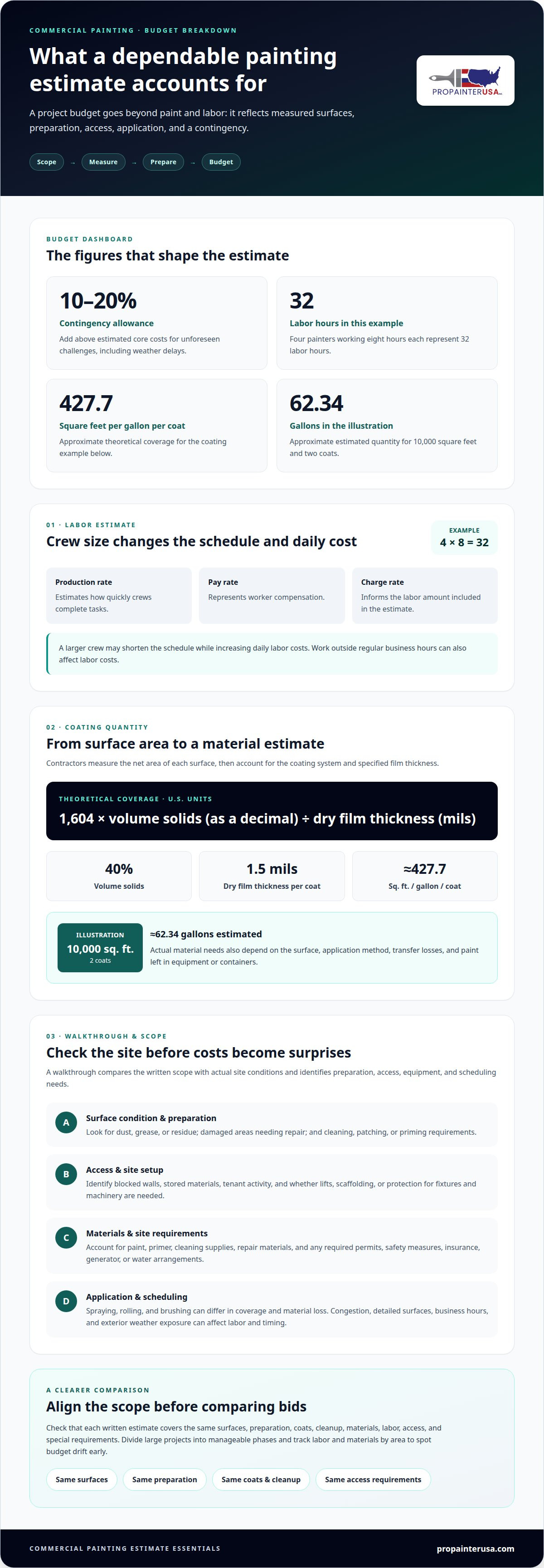
A painting estimate is only as dependable as the preparation it accounts for. To understand how to budget for a commercial painting project, start with the surfaces to be painted, the application method, access requirements, and the condition of each area. A budget should also include cleaning, repairs, patching, and priming where needed, plus a 10-20% allowance above estimated core costs for unforeseen challenges.
It’s easy to focus on paint and labor, but a walkthrough can reveal work that changes the scope, schedule, and materials required. This guide explains how to budget for a commercial painting project by showing how a professional builds an estimate, from measuring surfaces and assessing application methods to identifying cleaning and preparation needs. You’ll also see how to account for labor, access, and a contingency so the budget reflects the full project, not just the final coat.
• Compare written estimates by checking that each covers the same project scope, labor, materials, and special requirements.
• Break the work into sections and monitor labor as the project progresses to spot budget drift early.
• A thorough walkthrough can surface access, equipment, and scheduling needs before they become unexpected costs.
• Account for surface condition and preparation so the estimate reflects the work needed before paint is applied.
To understand how to budget for a commercial painting project, start with a clearly defined scope. A painting contractor measures the included surfaces, records their condition, and separates labor, materials, preparation, access, and special requirements. This detail helps prevent unnecessary work and makes estimates easier to compare. Before reviewing differences in approach or scheduling, make sure each bid covers the same areas and tasks.
Contractors use production, pay, and charge rates to build labor estimates. Production rates estimate how quickly crews complete tasks; pay rates represent compensation, while charge rates inform the labor amount included in the estimate. Four painters working eight hours represent 32 labor hours. A larger crew may shorten the schedule while increasing daily labor costs. Work scheduled outside regular business hours can also affect labor costs.
Commercial and residential estimates reflect different project conditions. Commercial work may involve larger or occupied spaces, restricted access, and scheduling around business operations. Residential estimates focus on the home’s surfaces and scope. Interior work has different exposure and access considerations than exterior painting, where weather can affect scheduling. The budget should list any applicable permits, site safety measures, and insurance costs rather than assume they are included.
A practical way to budget for a commercial painting project is to compare written estimates only after aligning their scopes. Confirm that each addresses the same surfaces, preparation, coats, cleanup, materials, and special requirements. Larger, continuous areas can produce economies of scale: painting thousands of linear feet in one run may be more efficient than painting scattered sections. Include a 10-20% allowance above estimated core costs for unforeseen challenges, including weather delays, as recommended by the U.S. Environmental Protection Agency.
Project size, surface area, preparation, number of coats, and site congestion all affect a commercial painting estimate. A larger facility needs more materials and labor, while intricate trim, accent walls, and hard-to-reach corners require more careful work. These factors shape the project scope and the suitable application method.
To estimate quantities, a contractor measures the net area of each surface, then considers the coating system and specified film thickness. The theoretical coverage formula in U.S. units is 1,604 multiplied by volume solids as a decimal and divided by dry film thickness in mils. Actual material needs also depend on the surface, application method, transfer losses, and paint left in equipment or containers.
For example, a coating with 40% volume solids and a specified dry film thickness of 1.5 mils per coat has theoretical coverage of approximately 427.7 square feet per U.S. gallon per coat. For 10,000 square feet of net surface area and two coats, the illustrative estimated quantity is approximately 62.34 gallons. Contractors use the current product data sheet and specified coating system to make project calculations.
Application method matters because coverage and material loss can differ between spraying, rolling, and brushing. A particular method may suit broad, open surfaces, while edges, trim, or obstructed areas call for more detailed work. Congestion around equipment, furnishings, or active work areas can slow access and setup. Exterior surfaces may also need a coating system suited to weather exposure. Finish selection, surface condition, and the number of coats all shape the estimate. For a project scoped around these details, explore commercial painting services.
A walkthrough lets the contractor compare the written scope with actual site conditions before work begins. The inspection can identify dust, grease, or residue that could interfere with paint adhesion, as well as damaged areas needing repair. It also reveals whether equipment, furnishings, or tenant activity restrict access. Recording these findings helps distinguish expected preparation from work that might otherwise arise after the project starts.
Additional budget items may include patching and repairs, surface cleaning, lift or scaffold rental, and setup. For multi-story commercial facilities, securing regional access solutions such as scaffolding hire Hertfordshire ensures safe working platforms while accurately forecasting equipment expenses. Include a permit allowance when the project or local requirements call for one. Equipment needs may also include protecting fixtures or machinery, plus generator or water arrangements if the site requires them. Listing each item clearly makes it easier to understand what the estimate covers.
Clear access can reduce setup obstacles and help crews work efficiently. During the walkthrough, the contractor can identify blocked walls, stored materials, or equipment that can be moved before painting. Clearing those areas may reduce labor and equipment needs. For example, an exposed wall is easier to prepare and paint than the same surface behind shelving that crews must work around.
Material planning depends on measured surface area, the coating system, and surface condition. The contractor can account for paint, primer, cleaning supplies, and repair materials based on the work identified onsite. For exterior projects, rain, wind, or extreme temperatures may delay work and extend the schedule. The U.S. Environmental Protection Agency recommends allowing a contingency for inclement weather and other unforeseen delays.
To keep costs controlled, a contractor can divide a large project into manageable phases and track labor and materials by area. A walkthrough also clarifies which surfaces are included, which repairs are expected, and what equipment is needed. Documenting the scope helps prevent missed tasks, unnecessary work, and avoidable changes during production.
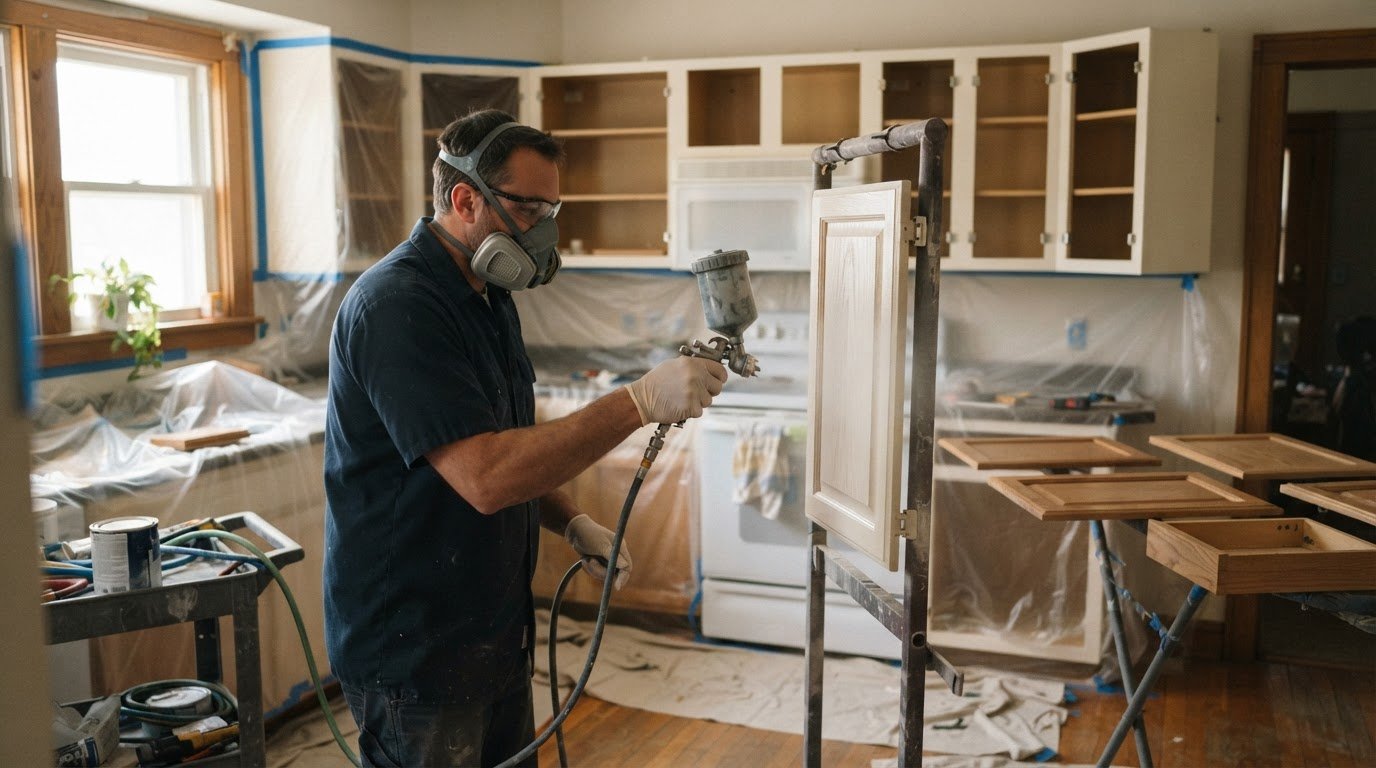
A commercial coating system starts with clean, sound surfaces. During preparation, the contractor identifies dust, grease, residue, cracks, dents, and damaged drywall. Contaminants can interfere with paint adhesion, while unrepaired flaws may show through the new finish. The estimate should describe cleaning and repairs separately from painting, rather than leave preparation undefined.
Cleaning requirements depend on what is on the surface and where it is located. A greasy area in a busy interior, for example, may need different treatment from a dusty wall in an open office. The contractor assesses the affected area and includes the required cleaning in the scope. Protecting nearby equipment and furnishings also matters, especially when cleaning or preparation could disturb them.
Next, the contractor identifies repairs that need patching before paint is applied. Cracks, dents, and damaged drywall should be repaired because paint may highlight rather than hide those flaws. The estimate can distinguish isolated patches from broader damaged areas, making the extent of repairs clear. If conditions vary between rooms, the contractor can describe each area separately instead of applying one assumption to every surface.
Primer is another project-specific allowance. Bare drywall, metal, or wood may require primer for proper adhesion and coverage. The contractor considers the substrate and specified coating system, then includes primer and application labor where needed. Quality materials matter, but the correct sequence matters too: clean the surface, complete repairs, apply primer when required, then paint. For commercial interior painting that includes patching and preparation, plan your painting project with a clear scope of work.
Pro Painter USA helps property owners plan commercial painting with a clear view of the work involved. For an interior or exterior project, the estimate can account for surfaces, access, application needs, cleaning, repairs, patching, and priming identified during planning. Sharing the areas to be painted, their condition, and any scheduling considerations helps establish a useful scope. That scope gives you a practical basis for understanding the work and organizing your budget, including preparation that supports a quality finish. Whether you’re updating an occupied commercial space or refreshing an exterior, Pro Painter USA provides commercial interior and exterior painting. Contact Pro Painter USA to discuss your commercial painting project.
A well-planned painting project can enhance a property and make future maintenance easier to organize. Use your budget as a planning tool, not just an approval figure: align the scope with your priorities, schedule, and the building’s condition. This gives decision-makers a clearer basis for turning estimates into a workable project plan. Knowing how to budget for a commercial painting project also helps set expectations before work begins.
Pro Painter USA provides residential interior painting, residential exterior painting, and commercial interior painting. If you’re ready to discuss your property’s painting needs, contact Pro Painter USA. A clear next step can help turn your plans into a considered painting project.
A professional estimate starts with a documented scope and a review of the property. For a Milwaukee office, for example, the estimate should distinguish public areas from back rooms if their surfaces or access differ. The contractor then organizes projected labor, materials, preparation, and special requirements so the estimate reflects the described work. Comparing bids is more meaningful when each contractor has priced the same areas and tasks.
The schedule depends on the area being painted, surface condition, application method, number of coats, and site access. Repairs or restricted work areas can add time. A larger crew may complete work sooner but increase daily labor costs. Exterior work also needs a schedule that accounts for weather delays. The project plan should identify work phases and areas that need to remain accessible.
Coverage varies by coating and application conditions. In the illustrative coating example, theoretical coverage is approximately 427.7 square feet per U.S. gallon per coat. That figure uses a specified coating and film thickness, so it isn’t a universal coverage rate. For a real project, the product data sheet, surface condition, number of coats, and application losses shape the quantity estimate.
Not necessarily. A project can be planned in phases if the scope and sequence are clear. For example, a business might schedule separate areas so work can continue while other spaces remain in use. Each phase should have defined surfaces, preparation needs, and a budget allocation. Avoid starting a phase without a clear plan for its work and materials.
Budget control starts with a defined scope and continues through regular tracking. Compare labor and material spending with the allocation for each project phase rather than waiting until the work is complete. If conditions change, document the added task and its effect on the schedule and budget before proceeding. This makes adjustments visible and helps decision-makers manage the project deliberately.
Material costs depend on the coating system, surface area, number of coats, and the preparation required. Primer, patching materials, cleaning supplies, and application losses may also affect the materials portion. Overall project pricing depends on these conditions alongside labor, access, and scheduling, and is provided after a quote request. A project-specific estimate can show how materials fit into the full scope.
You might find these helpful:
We are a team of interior and exterior painters and we are not limited to house painting only. We can paint different businesses like retail shops, commercial buildings, and apartments.
We also provide restaurant painting services. We can give you more information about these services if you give us a call.