Pro Painter USA
MILWAUKEE WI, USA,
November 19, 2026


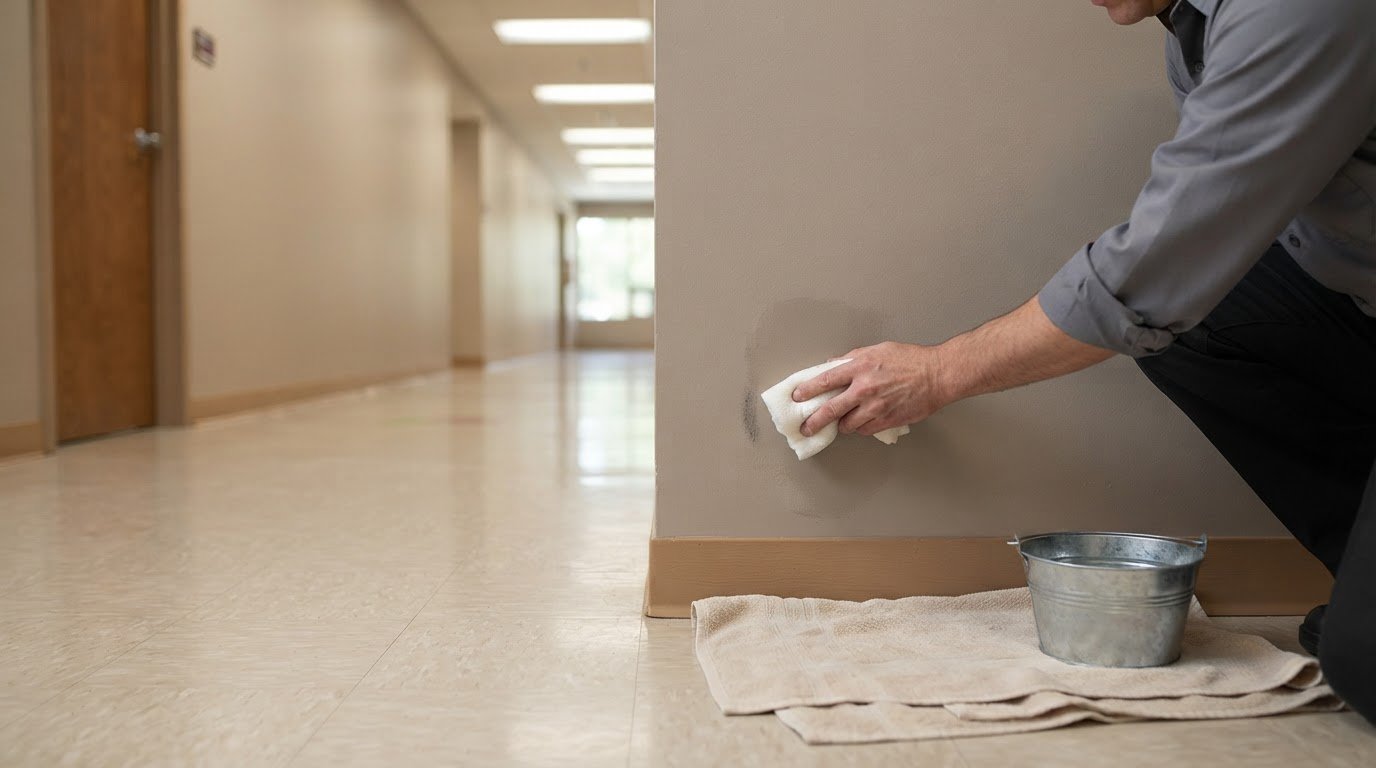
Matte paint needs a light touch: test a barely damp cloth in an inconspicuous spot, then wipe gently without scrubbing. For a practical routine on how to clean painted commercial walls, spot-clean monthly or as needed and deep-clean once a year.
It’s understandable to worry that water or friction could leave a mark or damage the finish. First remove dust, use as little moisture as possible, and work carefully rather than scrubbing at every stain.
This guide explains how to set a cleaning schedule for different areas, prepare a gentle solution, and reduce scuffs between cleanings. You’ll also learn how to protect the floor and wash from the bottom up, making drips easier to manage.
• Adjust wall care to the room: kitchen areas near a frequently used cooktop need more attention than low-traffic spaces.
• Start with warm water and mild dish soap, and use a thoroughly wrung-out sponge to limit excess moisture.
• Keep dust and scuffs in check by removing loose dust regularly and leaving space between furniture and walls.
• Protect floors with towels, then wash from the bottom up and rinse and dry each cleaned area.
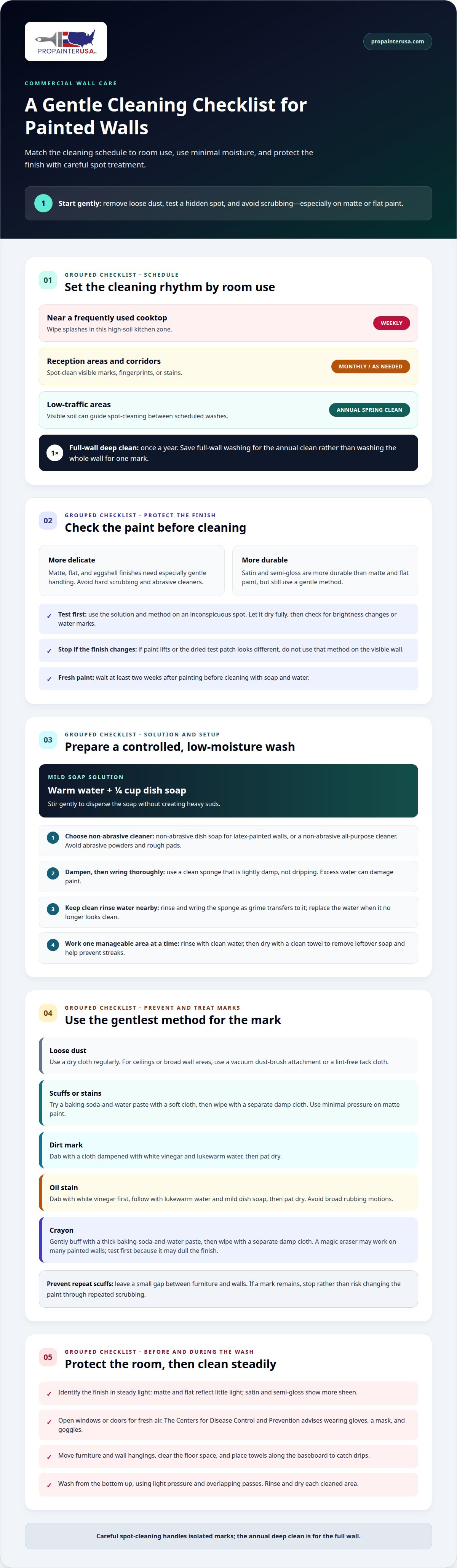
Spot-clean painted commercial walls monthly or as needed, and deep-clean them once a year. Wipe kitchen walls near a frequently used oven range or cooktop weekly; low-traffic areas can wait for annual spring cleaning. Before using a solution, test it in an inconspicuous spot. Once dry, check for changes in brightness or water marks.
• Set a routine based on activity. In a busy kitchen, wipe splashes near the cooktop weekly. In reception areas or corridors, spot-clean visible marks monthly or when they appear. Save full-wall washing for the annual deep clean, rather than washing every time a mark needs attention.
• Consider both traffic and color. Check entryways, shared work areas, and corridors more often, since regular contact can leave fingerprints and stains. Dark scuffs may stand out on light-colored paint, while pale residue can be more noticeable on darker or saturated colors. Let visible soil guide spot-cleaning between scheduled washes.
• Consider the paint finish before choosing a method. Matte and flat paint are less durable than satin or semi-gloss, so avoid hard scrubbing. Test a damp cloth on a hidden area of a matte wall first. If paint lifts or the dried patch looks different, stop using that method on the visible wall.
• Test every cleaning solution and method in an inconspicuous area before washing. Let the spot dry fully, then check for changes in brightness or water marks. This helps show whether the finish can tolerate the method, especially with matte paint or a noticeable wall color.
• Give fresh paint time to cure. Wait at least two weeks after painting before cleaning with soap and water. Until then, avoid washing the new finish. Once it has cured, return to your room-based routine and spot-clean isolated marks.
Spot-clean isolated or visible marks as needed: monthly in reception areas and corridors, and weekly near a frequently used cooktop. Wash the full wall during the annual deep clean, rather than for a single mark.
• Knowing how to clean painted commercial walls starts with choosing a solution suited to the paint. Fill a pail with warm water and add ¼ cup of dish soap. Stir gently to disperse the soap without creating heavy suds. This mild mixture is suitable for routine washing of painted surfaces.
• Choose a non-abrasive dish soap for latex-painted walls. A non-abrasive all-purpose cleaner is another option. Avoid abrasive powders and rough pads, which can scratch or dull the finish. Matte, flat, and eggshell paint need especially gentle handling because they’re less durable than glossier finishes.
• Match your cleaning pressure to the finish. Gloss and semi-gloss paint are more durable and can tolerate cleaning with degreasers such as dish soap. Matte paint is more delicate, so use light pressure and don’t scrub. Even with the right solution, apply it gently.
• Dampen a clean sponge with warm water, then wring it out thoroughly. Add the soapy mixture without letting the sponge drip. Excess water can damage paint, so wring it out further if liquid runs down the wall during a test wipe. A lightly damp sponge is easier to control.
• Keep a second container of clean water nearby for rinsing. As grime transfers to the sponge, rinse and wring it out before returning to the wall. This helps prevent dirt from spreading across nearby surfaces. Replace the rinse water when it no longer looks clean.
• These steps show how to clean painted commercial walls while reducing the risk of soap residue and streaks. Wash one manageable area at a time, then rinse it with clean water and dry it with a clean towel. The final rinse removes leftover soap before it can leave a film as the wall dries.
Remove loose dust with a dry cloth, and leave a small gap between furniture and walls to reduce chair and couch scuffs. For fingerprints, grease, or stains, start with gentle spot treatment instead of scrubbing the whole surface. Match the method to the mark and paint finish.
• Dust walls regularly with a dry cloth to prevent loose particles from building up. For ceilings or broad wall areas, use a vacuum’s dust-brush attachment or a lint-free tack cloth. Removing grit first helps keep it from rubbing against the paint during cleaning.
• Move chairs, couches, and other furniture away from painted walls. Even a small gap can prevent repeated contact from leaving scuffs. When dusting or tidying, check high-contact spots such as behind seating or beside a doorway.
• For a scuff or stain, try a paste made from baking soda and water. Apply it gently with a soft cloth, then wipe the area with a separate damp cloth. Use minimal pressure on matte paint, which can be less durable than satin or semi-gloss.
• Dab a dirt mark with a cloth dampened with white vinegar and lukewarm water, then pat it dry. For an oil stain, dab with white vinegar first, follow with lukewarm water and mild dish soap, then pat dry. Avoid broad rubbing motions that could spread the stain.
• For crayon, gently buff the mark with a thick baking-soda-and-water paste. Wipe it away with a separate damp cloth. A magic eraser can also remove crayon from many painted walls, but test it in an inconspicuous spot first because it may dull the finish.
• Use the gentlest method that lifts the mark, especially on matte, flat, satin, eggshell, or chalk-painted surfaces. These finishes don’t stand up well to abrasive cleaners. If a mark remains, stop rather than risk changing the paint’s appearance through repeated scrubbing.
• Identify the finish by viewing the wall under steady light. Matte and flat paint reflect little light; satin and semi-gloss show more sheen. Before cleaning, open windows or doors for fresh air. The Centers for Disease Control and Prevention advises wearing gloves, a mask, and goggles to protect your eyes, nose, mouth, and skin.
• Clear the wall and the floor space in front of it. Move furniture and wall hangings, then place towels along the baseboard to catch drips. With obstacles out of the way, you can work in steady, overlapping sections without bumping wet surfaces or tracking moisture across the floor.
• Dust the wall before washing with a dry cloth or a vacuum dust-brush attachment. This removes loose particles that could spread into streaks when wet. Check corners, trim edges, and areas behind furniture, where dust can collect even if the open wall looks clean.
• Start at the bottom of a section and work upward with a damp, thoroughly wrung-out cloth or sponge. Use gentle strokes, slightly overlapping each pass. Bottom-up washing keeps runoff on the still-soiled area below, rather than letting dirty water streak across a freshly cleaned lower section.
• Rinse the cloth regularly in clean water and wring it out before continuing. If the water becomes visibly dirty, replace it to avoid transferring grime back onto the wall. Work section by section, watch for drips, and wipe them promptly with a clean cloth.
• Rinse each washed area with clean water, then dry it with a clean towel. As it dries, check the finish for streaks, missed marks, or changes in appearance. If a spot remains, repeat gently on that area instead of scrubbing the entire wall again.
• If recurring marks or an uneven-looking finish call for a broader refresh, plan a commercial wall refresh.
Pro Painter USA helps property owners refresh painted spaces when routine cleaning no longer restores a consistent appearance. If commercial walls have persistent stains, worn areas, or a finish that still looks uneven after gentle washing, commercial interior painting can provide a broader reset than repeated scrubbing. Repainting may also make sense when marks are widespread or the existing finish has become difficult to maintain.
Cleaning is useful for everyday upkeep, but it can’t renew worn or damaged paint. Pro Painter USA also provides residential interior and exterior painting, as well as commercial exterior painting, for properties that need a broader update.
For guidance on a painted space that needs more than routine cleaning, contact Pro Painter USA.
Treat wall care as part of managing the space, not just a response to visible dirt. A brief maintenance note can help staff recognize recurring marks, identify areas needing closer attention, and use consistent cleaning methods across rooms. It also gives you a clearer picture of how the finish holds up during everyday use.
Knowing how to clean painted commercial walls is useful; applying that knowledge consistently helps maintain the space’s appearance. If repeated cleaning no longer leaves the walls looking even, consider whether a painting refresh fits your next property improvement plan. Pro Painter USA can help you choose the right next step for your property.
Contact Pro Painter USA to discuss your painting needs. A considered approach can keep your property looking cared for and ready for the work ahead.
Use a soft cloth that’s barely damp, and apply light pressure to matte paint. Test it in a hidden spot, then let the area dry and check for lifting or visible changes. If paint transfers to the cloth or the patch looks different, stop. Avoid abrasive cleaners and repeated scrubbing, which can dull or wear the finish.
Use warm water, mild dish soap, a soft sponge or lint-free cloth, clean rinse water, and a towel for drying. To make a solution, mix water with ¼ cup of dish soap. Latex-painted walls can also be cleaned with non-abrasive dish soap or an all-purpose cleaner. Keep the sponge wrung out, especially on matte or flat finishes.
First identify the finish and test your chosen method discreetly. Clear the work area, remove loose dust, and place towels along the wall’s base. Wash gently from the bottom up with a damp, wrung-out sponge, rinsing it as dirt collects. Rinse the cleaned area with fresh water, then dry it with a clean towel. This is a practical way to clean painted commercial walls.
Focus on visible marks rather than repeatedly washing the whole wall. In a busy corridor, for example, gently spot-clean fingerprints near doorways and other high-contact areas. Use a soft cloth, minimal moisture, and light pressure, especially on matte paint. If a mark resists gentle treatment, don’t keep scrubbing; abrasion can change the finish and leave a dull patch.
Spot-clean painted walls monthly or as needed, and deep-clean them once a year. In restaurants, wipe kitchen walls near a frequently used oven range or cooktop weekly. In offices and schools, address visible marks between deeper washes, paying attention to entrances, corridors, and shared spaces. Low-traffic areas can be included in annual spring cleaning.
Abrasive cleaners and forceful scrubbing can wear or dull delicate finishes, including matte, flat, satin, eggshell, and chalk paint. Excess water can also damage paint, so avoid dripping cloths and sponges. A magic eraser may dull some finishes, so test it discreetly before use. If a spot remains, don’t respond with harsher scrubbing on the visible wall.
You might find these helpful:
We are a team of interior and exterior painters and we are not limited to house painting only. We can paint different businesses like retail shops, commercial buildings, and apartments.
We also provide restaurant painting services. We can give you more information about these services if you give us a call.