

Pro Painter USA
MILWAUKEE WI, USA,
October 24, 2026


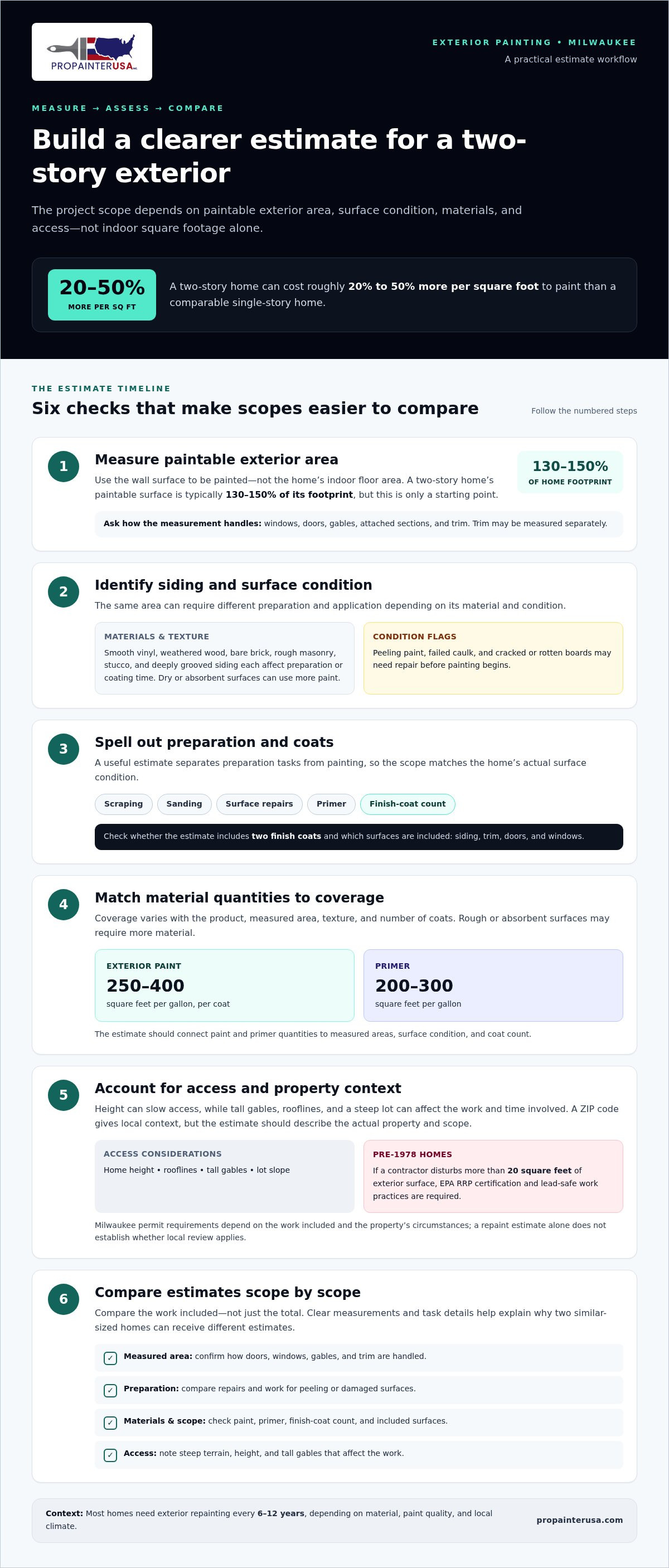
A two-story home can cost roughly 20% to 50% more per square foot to paint than a comparable single-story home. For the cost to paint a two-story house exterior in Milwaukee, the key measure is paintable exterior surface area, not just the home’s indoor square footage: height, siding type, and surface condition all affect the work involved.
A home’s listed size is only a starting point: two houses with the same square footage can have very different exterior painting needs. This guide explains how to estimate paintable area, how siding and surface preparation affect the work, and what to compare in estimates. You’ll get a clearer picture of why costs vary and what an estimate should cover.
• Use paintable exterior surface area, not indoor square footage alone, to understand the scale of a two-story painting project.
• Compare how siding material, peeling paint, and surface repairs affect the preparation and painting work required.
• Review estimates for the measured areas, preparation tasks, number of coats, and surfaces included so you can compare like for like.
• Account for height, rooflines, and lot slope, which can affect access and the time needed to complete exterior work.
• Learn how Pro Painter USA’s residential exterior painting can help address your home’s exterior needs.
House size sets the amount of surface to cover, but siding changes how much preparation and painting each square foot requires. A two-story home can cost roughly 20% to 50% more per square foot to paint than a comparable single-story home. Height can slow access, while siding texture affects how quickly painters can prepare and coat the walls.
To understand the cost to paint a two-story house exterior in Milwaukee, consider the siding and its condition as well as the home’s square footage. Dry boards, bare brick, and stucco can absorb paint, while deeply grooved siding takes longer to coat. Smooth vinyl, rough masonry, and weathered wood each call for different preparation and application. Peeling paint, failed caulk, and cracked or rotten boards may also require repairs before painting begins.
Material influences repaint timing, too. Most homes need exterior repainting every 6-12 years, depending on material, paint quality, and local climate. A durable finish still depends on proper surface preparation and choosing paint suited to the substrate. A quote should distinguish paintable siding from trim, doors, and windows, since those areas may involve separate preparation and detail work.
Paint and primer quantities depend on measured area, texture, and the number of coats. Exterior paint commonly covers 250 to 400 square feet per gallon per coat, while primer often covers 200 to 300 square feet per gallon. Rough or absorbent surfaces can use more material. Labor accounts for 60 to 90% of the total exterior painting bill, so difficult access, repairs, and detailed siding can affect painting costs beyond the gallons required.
Milwaukee permit requirements depend on the work included and the property’s circumstances; a repaint estimate alone doesn’t establish whether local review applies. For pre-1978 homes, contractors disturbing more than 20 square feet of exterior surface must be EPA RRP-certified and follow lead-safe work practices.
Compare estimates by checking whether they specify siding type, measured surface area, preparation, primer, and finish coats. A wood-sided wall with peeling boards needs different work from intact vinyl, even if both cover the same area. This helps explain why project costs vary and why an interior painting estimate is not a useful comparison for exterior work.
A useful estimate connects the home’s location and measured exterior area to specific preparation and painting tasks. Compare the scope, not just the total, so you know what the project includes before work begins.
A ZIP code provides local context, while project size helps define the surface area and labor involved. In Milwaukee, two houses with similar indoor square footage can need different exterior work because their shapes, heights, and siding conditions vary. A steep lot, tall gables, or peeling boards can affect access and preparation. A tailored estimate should describe the actual property, not rely on a generic home-size category.
Measured exterior area is the paintable wall surface, rather than the home’s interior floor area. For a two-story home, paintable surface area is typically 130-150% of the home’s footprint. That gives a useful starting point, but windows, doors, gables, and attached sections affect the final measurement. Ask how the estimate accounts for those areas and whether trim is measured separately. Clear measurements make it easier to understand material quantities and compare project scopes.
An exterior estimate should identify the paint, primer, and preparation materials included in the scope. It should also state whether the work includes two finish coats, since coat count affects the amount of paint needed. Peeling paint may require scraping, sanding, or priming before the finish coat goes on. The estimate should distinguish these tasks from painting alone, so the listed materials match the home’s surface condition.
Paint selection affects coverage calculations, and the product should suit the siding being painted. Exterior paint commonly covers 250 to 400 square feet per gallon per coat, while primer often covers 200 to 300 square feet per gallon. Rough or absorbent surfaces can require more material than smooth walls. Color choices matter, too: adding exterior colors can increase the time and materials needed. A useful estimate ties paint quantities to measured areas, coats, and surface condition.
Use this checklist to compare estimates for the same painting project:
• Confirm the measured paintable area and how doors, windows, and trim are handled.
• Compare the preparation scope, especially repairs to peeling or damaged surfaces.
• Check the specified primer, paint, coat count, and areas included.
• Note access conditions, such as steep terrain or tall gables, that affect the work.
For a Milwaukee home, a residential exterior painting estimate can help connect these details to the property’s specific surfaces and scope.
In Milwaukee, cost depends on paintable area, siding condition, preparation, and access. A two-story home with badly peeling siding needs more work than a comparable home with sound surfaces, so its estimate should reflect the property’s actual scope.
Siding type affects material use and the time needed to prepare and coat each surface. Wood boards may need scraping, repairs, and primer where paint has failed; vinyl siding and brick require different preparation and application methods. Texture matters, too: rough masonry and deeply grooved siding can take longer to coat than smoother walls. These conditions help explain why similar homes can receive different estimates.
House height also changes the work involved. A two-story home costs roughly 20% to 50% more per square foot to paint than a comparable single-story home. That difference reflects access challenges and slower work at height, not simply a larger wall area. The price depends on the specific project and is provided after a quote request.
An estimate for siding and trim should separate broad wall areas from details such as window frames, doors, and fascia. Painters can reach more surfaces from ground-level equipment on a one-story house, while a two-story home may require ladders or staging for upper walls and trim. Tall gables add difficult angles and detailed edge work. Check which siding and trim areas each estimate includes.
Color choices can affect the scope, too. Painting in several exterior colors may require more masking and careful transitions between siding and trim. A porch, shutters, or previously painted windows add surfaces beyond the main walls. Listing these areas separately shows what the estimate covers, rather than treating every exterior feature as part of the siding.
Peeling paint may require scraping, sanding, spot priming, and repairs before finish coats go on. Failed caulking and cracked or rotten boards may need attention, too; home improvement and remediation providers such as Hughes Termite Control often resolve underlying wood damage before fresh coats are applied. These are general market estimates, not a project-specific quote.
Lead-safe work can affect projects on older homes. According to the EPA, contractors disturbing more than 20 square feet of exterior surface in a pre-1978 home must be EPA RRP-certified and follow lead-safe work practices. Steep lots, high gables, and difficult ladder placement can also slow work or require staging, affecting labor and access needs. Ask that the estimate identify preparation, repairs, and access work as separate scope items.
Labor accounts for 60 to 90% of the total exterior painting bill, so preparation and access can meaningfully affect the overall estimate. Interior painting involves different surfaces and access conditions, making it a poor comparison for exterior work. For a useful comparison, review whether each estimate includes the same siding, trim, repairs, preparation, and finish coats.
Home size is a starting point, but exterior painting estimates depend on paintable area, height, complexity, and preparation. Treat size ranges as planning references, then compare them with the measured exterior and the work listed.
These examples show how estimates can change as home size changes:
Typically range from $3,500 to $6,000 depending on siding material and trim detail.
Generally fall between $5,500 and $9,000 with standard prep work included.
Often start around $8,500 and can exceed $12,000 for complex architectures and extensive surfaces.
Read each range with its measurement in mind. A home’s listed square footage usually describes interior floor area, while a paintable-area figure describes exterior surfaces to coat. Those are different measurements, so a 2,500-square-foot house and a 2,500-square-foot paintable exterior shouldn’t be treated as equivalent examples. The estimate should identify which measure it uses.
Complexity explains why houses with similar floor areas can fall at different points in an estimate range. A two-story layout, tall gables, multiple exterior sections, and detailed trim can add access and application time. Preparation matters, too: peeling paint, failed caulking, or damaged boards may need attention before finish coats go on. The scope should distinguish those tasks from painting sound siding.
For a useful comparison, line up estimates by total paintable area and included work. Check whether each covers siding, trim, primer, finish coats, and preparation. Note whether shutters, porch surfaces, or previously painted windows are included. If one estimate covers these features and another excludes them, the totals do not represent the same project.
Use a range as a budgeting guide, not a promised price. The project cost depends on measured exterior area, siding condition, height, access, and included surfaces. A project-specific estimate gives you a figure based on that scope, rather than an interior-size label alone.
A per-square-foot figure helps compare exterior painting estimates only when each uses the same measured surface and scope. Divide the quoted total by the paintable exterior area to find the effective rate. Treat this as a comparison tool, not a standalone price: preparation, access, and included surfaces can make rates differ for valid reasons.
Start with the measured wall area in the estimate, not the home’s interior square footage or lot size. Confirm whether the calculation covers siding alone or also includes trim, gables, shutters, and previously painted windows. An estimate that includes extra surfaces has a different measured area and total scope. Without that distinction, a square-foot comparison can mislead.
Next, compare preparation and application details. Washing, scraping, caulking, repairs, primer, and finish coats all affect the work covered by an estimate. For example, one that includes washing and preparing peeling paint should not be compared directly with one covering application over sound siding. Check that these tasks are clearly described so the effective rates reflect comparable work.
Surface type changes the work required per square foot. Smooth siding can be more straightforward to coat, while rough or deeply grooved surfaces take more care to prepare and paint. Height matters as well: upper-story walls and tall gables can slow the work because they may require ladders or staging. A typical rate needs context about the home’s material, access, and condition.
Use this comparison checklist for each estimate:
• Record the paintable square footage and the surfaces included.
• Compare washing, scraping, repairs, and caulking in the prep work.
• Check the specified primer, finish coats, and paintable materials.
• Note whether ladders, staging, or difficult access are part of the scope.
• Divide each total by its measured area only after scopes match.
If one estimate has a higher effective rate, identify what it includes before deciding. Extra preparation or detailed trim may explain the difference. A smaller measured area can also raise the rate, even when the total is lower. A rate without its scope does not show which estimate covers the work your home needs.
For a Milwaukee exterior, request an exterior painting estimate based on the home’s measured surfaces, siding condition, and preparation needs. A clear scope makes the square-foot comparison more meaningful and helps you understand how washing, access, and finish work fit into the project.
Pro Painter USA provides Residential and Commercial Exterior Painting for homeowners planning work on siding, trim, and other exterior surfaces. A clear estimate connects the measured paintable area, surface condition, and preparation needs to the project scope. If you’re also refreshing rooms inside, Pro Painter USA provides Residential and Commercial Interior Painting.
Whether your Milwaukee home needs exterior repainting or an interior update, start by discussing the surfaces and your goals. This helps define the work to be done instead of relying on a generic size range.
Contact Pro Painter USA to discuss your painting project, or visit propainterusa.com.
Understanding the cost to paint a two-story house exterior in Milwaukee is a starting point for making a practical plan, not a reason to rush. Consider how you want the finished exterior to look and function, then use that goal to prioritize the work. Project cost depends on your home’s surfaces, condition, preparation needs, and requested scope, so a tailored estimate is the best basis for planning.
Pro Painter USA provides Residential and Commercial Exterior Painting, Residential and Commercial Interior Painting, and commercial painting services. Whether you’re planning an exterior refresh or painting another space, a complimentary estimate can help clarify the scope and next step.
Contact Pro Painter USA to discuss your painting project. A clear plan can help you move forward with care and confidence.
For 1,600 square feet of paintable wall area, two finish coats typically require about 8 to 13 gallons of paint. Priming that entire surface typically takes about 5 to 8 gallons. Treat these as planning quantities: siding texture, absorption, and the product’s coverage rate affect the actual amount. Measure siding separately from trim and other surfaces, since those areas may use different colors or require additional coating.
Location matters because access, terrain, and exposure vary, not just because of an address. Steep lots can complicate ladder placement, and tall gables can slow the work. Conditions can differ across Milwaukee, Shorewood, Whitefish Bay, Fox Bay, Glendale, Fox Point, Bayview, Grafton, Cedarburg, Port Washington, Wauwatosa, Menomonee Falls, Richfield, West Bend, Hartford, Waukesha, New Berlin, Hales Corners, Oak Creek, and Cudahy. The home’s condition and paintable area still determine the scope.
Spring or fall is generally a good time for exterior painting because the weather is milder than in summer or winter. A lower price does not automatically follow from a particular season. Timing affects the project through suitable painting conditions, scheduling, and preparation needs. Plan around the surface and forecast rather than choosing a date based only on the calendar. This can help reduce interruptions during preparation and application.
This is not a rate per square foot of indoor living space. A rate is meaningful only when you know which exterior walls and details the measured area covers. Siding condition, access, and preparation can change the effective rate, so compare estimates with matching scopes.
A Milwaukee exterior estimate may include power washing, preparation, and exterior paint. A typical estimate describes two coats of paint or stain, but the specific surfaces and tasks matter. Look for siding, trim, repairs, primer, and finish coats in the written scope. If a porch or shutters are included, they should be identified clearly. This makes it easier to determine whether estimates cover the same work.
Labor accounts for 60 to 90% of a professional exterior painting bill. The balance includes materials and other project needs, while extensive preparation can add labor before painting begins. Scraping, caulking, or repairing damaged boards takes time, and rough or absorbent siding can require more paint. Consider the full scope together: a low material quantity doesn’t necessarily mean a low total if access or surface preparation is demanding.
Wisconsin projects also depend on paintable area, siding condition, height, and preparation. Compare local estimates by scope rather than relying on state boundaries alone.
Spring and fall are generally good seasons for exterior painting in Milwaukee, when the weather is milder than in summer or winter. Timing matters because the surface and conditions need to support preparation and paint application. A schedule that allows washing or repairs before coating can help the work proceed in sequence. Plan around the home’s condition and suitable weather, not an assumed seasonal discount.
You might find these helpful:
We are a team of interior and exterior painters and we are not limited to house painting only. We can paint different businesses like retail shops, commercial buildings, and apartments.
We also provide restaurant painting services. We can give you more information about these services if you give us a call.


