

Pro Painter USA
MILWAUKEE WI, USA,
October 29, 2026


The total is only the starting point. When reviewing a detailed painting estimate, look for a clear account of the surfaces, labor, materials, preparation, repairs, and cleanup. These details show what work is included and how the project scope shapes the estimate.
It’s natural to focus on the bottom line, but two estimates are easier to compare when you can see what work each one covers. This guide explains how contractors gather project details and calculate costs, why interior and exterior estimates can differ, and what to look for in paint, preparation, repairs, and cleanup. You’ll also see how interior estimates account for walls, ceilings, and trim, so you can understand the planned work before deciding whether it fits your home.
• Compare interior and exterior estimates by the work involved, including surface condition, access, and the areas included, rather than by the total alone.
• Look for separate labor, material, and additional-charge details so you can see how the project total is built.
• Review the preparation, repair, and cleanup tasks in the scope; these affect both the work required and the finished result.
• For interior painting, make sure the estimate identifies whether walls, ceilings, and trim are included and accounts for room measurements and paint choices.
• Compare the scope before deciding which estimate is higher. Interior work may include walls, ceilings, trim, doors, and detailed room edges. Exterior work can involve siding, trim, doors, windows, and surfaces exposed to weather. Preparation and access needs can affect the total, so “interior” or “exterior” alone does not determine the project cost.
• Use a site inspection to clarify what’s included. A contractor can visit the property, review project plans, or consult with you before preparing an estimate. Point out areas needing attention, such as peeling exterior paint or interior wall damage. These details help define the scope and show whether sanding, patching, or priming is included.
• Review the scope room by room or surface by surface. For interior work, note whether walls, ceilings, and trim are included in each room. For exterior work, identify the siding, trim, doors, or windows covered. Compare the listed surfaces with your plans and clarify any differences before work begins.
• Check how the estimate reaches its total. It should add the project costs together and show what the total covers, including labor, materials, preparation, and listed additional charges. Compare the same work across estimates, rather than judging totals with different surface areas or preparation tasks. A changed scope can change the total, so make sure revisions match your goals.
• Look for planned start and finish dates. They give the project a defined schedule, which should account for possible disruptions and weather. This is especially important for exterior work, when conditions can affect painting. An interior schedule may also depend on the rooms and surfaces included.
• Read the estimate as a project plan, not just a total. Check that the scope, costs, and dates describe the same work. If your priorities change before painting begins, update the scope and review the revised work and total together, so you understand what the agreed project includes.
A clear estimate separates labor, materials, and additional charges, making it easier to understand the total. Review each category against the scope and paint choices.
•
Compare labor and materials as separate parts of the estimate. The materials section should identify paint types and quantities, while labor should correspond to the listed tasks and surfaces. Check that both cover the same scope. If the estimate includes walls and trim, for example, labor and materials should account for both.
•
Review the labor charge alongside the work it covers, not as an isolated figure. Labor can reflect surface area, room details, preparation needs, and the tasks listed. Compare estimates with the same scope and expectations. A lower labor total may cover fewer tasks, so check whether sanding, patching, priming, and application are included.
•
Compare the hours and tasks for the specific project type. Interior painting can take 2 to 3 times as many labor hours as the same exterior square footage because rooms may involve ceilings, trim, edges, and furniture protection. Exterior work has different access and weather considerations. Check that the estimate explains its labor assumptions instead of treating equal square footage as equal effort. For more context on painting project planning, review how the listed work aligns with your expectations.
Review the estimate for preparation, repairs, furniture protection, and cleanup, not just paint application. It should also set out the project schedule and account for cleanup and possible disruptions.
•
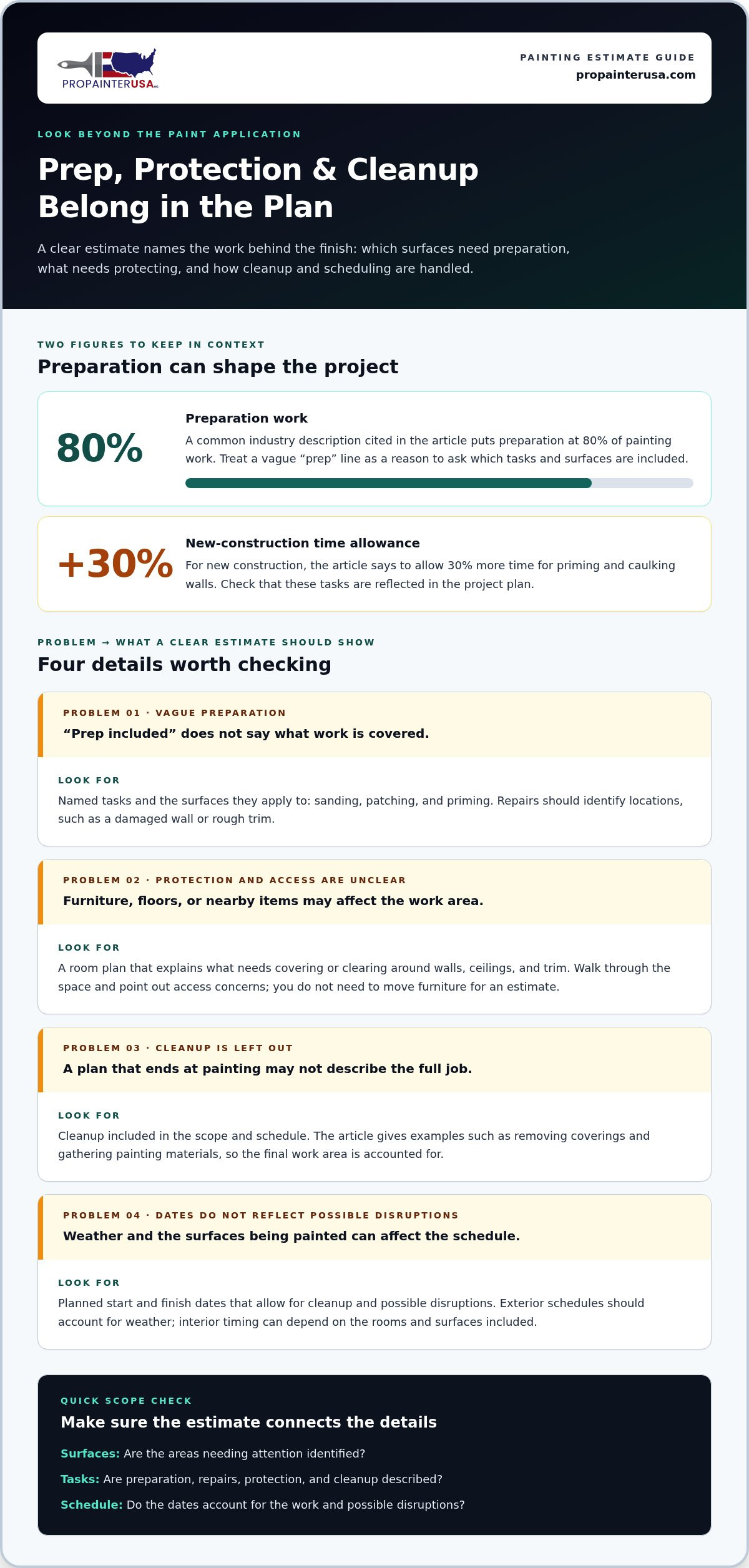
Check that the estimate names each preparation task and the surfaces involved. Look for sanding, patching, and priming, with repairs described by location, such as a damaged wall or rough trim. A common industry description puts preparation at 80% of painting work, so a vague “prep” line can obscure substantial effort. For new construction, allow 30% more time for priming and caulking walls.
•
Walk through the room and note furniture, floors, and nearby items that need protection. You don’t need to move furniture for an estimate; the estimator needs to see the space. Check whether the project plan explains which areas need covering or clearing, especially around walls, ceilings, and trim. A crowded room, for example, can limit access to a wall, so the plan should account for it.
•
Check that the scope and schedule include cleanup, not only preparation and painting. The estimate should include start and finish dates and allow for cleanup and possible disruptions. Exterior schedules should account for weather. Look for a clear description of the final work area, such as removing coverings and gathering painting materials, so cleanup is part of the planned work.
To know what to look for in a detailed painting estimate, start with how it measures rooms and identifies surfaces. The estimate should state the number of coats; the required count depends on the surface and finish goals.
• Compare the room measurements with the surfaces listed. A detailed painting estimate should show whether walls, ceilings, and trim are included, rather than relying on one unexplained area. Ceiling height affects the calculation: an 8-foot ceiling differs from a 10- or 12-foot ceiling and can add hundreds of square feet of wall area per room. Match each listed surface to your project.
• Use the measured wall area to understand the paint quantity. A gallon of quality paint can cover 300 to 350 square feet of wall space. For two coats, double the wall square footage before calculating gallons. This gives you a practical way to follow the material calculation and see whether the estimate accounts for the planned coverage.
• Look for coat counts, paint types, and finishes tied to each surface. The estimate should identify the planned products and finishes for walls, ceilings, and trim. A detailed painting estimate distinguishes, for example, the wall finish from the trim finish and makes the planned application clear before work begins. If your space calls for distinctive feature walls alongside standard paint, exploring specialists such as Wall & Ink can help you plan custom murals or printed designs as part of your overall decor.
• Review the estimating method alongside the measured work. The National Association of Home Builders survey cited an average overhead share of about 10% for trades. A professional estimate often takes less than an hour, depending on project size.
• Read the schedule and scope together, including cleanup and the rooms covered. If you’re planning an interior project, request an interior painting estimate.
Pro Painter USA provides residential interior painting for homeowners planning a room refresh or a broader update. If your estimate review has helped clarify which rooms and surfaces need attention, the next step is to define the project scope, including walls, ceilings, trim, preparation, and cleanup.
A clear scope helps align the planned work with your goals, whether you’re updating one room or several. Pro Painter USA also handles residential exterior painting and commercial interior and exterior painting, so property owners can discuss the painting project that fits their needs.
For a residential interior painting project, contact Pro Painter USA to discuss your plans.
Use your estimate as a planning tool, not just a document to approve. Before work begins, note decisions that could shape the finished space, such as which rooms to prioritize, the look you want, and how the work fits your household or business routine. When painting is part of a broader commercial or residential overhaul, examining project portfolios from established renovation specialists such as JM & SONS General Contractor Pte Ltd can also offer useful insight into how full interior fit-outs coordinate multiple trades and scopes. Keeping those priorities together gives you a practical reference from planning through completion.
Knowing what to look for in a detailed painting estimate can also help you feel more prepared to discuss the work ahead. If you’re ready to take the next step, share your project goals with Pro Painter USA and discuss the painting work that suits your property.
Contact Pro Painter USA to start a conversation about your project. A well-planned painting project can bring your vision into focus and help you move ahead with confidence.
Painting contractors estimate a project by assessing its surfaces, access, and required work. Room shape, built-in features, and narrow spaces can affect how easily painters reach edges and corners. A room with several doorways, for example, may need different detailing from an open room of similar size. Those details help the contractor plan labor and materials and calculate the total.
A painting estimate should identify the property, describe the work, state the total, and explain the schedule and payment terms. Look for start and finish dates, any deposit requirement, payment due dates, and accepted payment methods. If warranty coverage is offered, its duration and terms should be described. These details help you understand the agreement as well as the painting tasks.
A detailed painting estimate should make the project boundaries easy to understand. Check that it names the rooms or exterior areas covered and distinguishes included work from optional items. For example, it may cover a living room but exclude its closet, or list repairs to a damaged section separately. Clear labels show what the agreed total represents.
Material estimates reflect the paintable surfaces, selected products, and planned coverage; labor reflects the work needed to complete them. A room with built-in shelving, intricate trim, and several color changes may need more detailed work than a simple open room. Reviewing these details helps explain why estimates can differ even when projects appear similar.
A good estimate identifies preparation and repairs by task, location, and extent. A small patch in one area differs from multiple damaged sections across several rooms. Priming may also depend on the surface and its condition. Look for preparation and repair tasks listed separately, so you can distinguish paint-ready work from additional surface restoration.
The estimate should identify the selected paint brand and product, along with the finish and color for each surface. For example, it can distinguish the wall paint from the trim product and note the intended sheen for each. Product details make it easier to understand what materials are planned and keep the selection clear if the project includes several rooms.
You might find these helpful:
We are a team of interior and exterior painters and we are not limited to house painting only. We can paint different businesses like retail shops, commercial buildings, and apartments.
We also provide restaurant painting services. We can give you more information about these services if you give us a call.


