

Pro Painter USA
MILWAUKEE WI, USA,
October 23, 2026


The lowest quote isn’t always the best value for painting kitchen cabinets. In Milwaukee, the cost depends on how much cabinetry needs work, the condition of its surfaces, and the level of detail; a project price is provided after a quote request. If you’re searching for kitchen cabinet painting near me, compare what each estimate includes, not just its total.
A refreshed kitchen doesn’t have to mean a full remodel. The right approach depends on your cabinets’ condition and whether you plan to keep the existing layout. Sound cabinet boxes and doors are generally better candidates for painting than cabinets with structural or water damage.
This guide explains what affects project costs, how cleaning, sanding, and other preparation fit into the work, and the differences between painting doors on-site and finishing them separately. You’ll also learn how to compare local painters’ scopes and understand which option may suit your home.
• Compare painting or refinishing with refacing based on cabinet condition, desired changes, and whether you plan to keep the existing layout.
• Look for thorough degreasing, sanding, and surface-specific preparation in the proposed work plan, since these steps help paint adhere.
• Compare estimates by the preparation, repairs, and finishing steps they include, not by the total alone.
• Consider how doors and drawer fronts will be finished: removing them for separate work can help create a smoother result and reduce disruption at home.
• Use the guide’s comparison points to identify an independent local painter whose process fits your cabinets and project priorities.
Cabinet painting costs depend on the amount of cabinetry, surface damage, and decorative detail. A project price depends on the case and is provided after a quote request; the scope, repairs, preparation, and finish all affect the estimate. Painting cabinets alone generally doesn’t require a permit; added remodeling work should be considered separately under Milwaukee’s applicable requirements.
Refinishing can update existing cabinets without replacing them or undertaking a full kitchen remodel. It keeps the cabinet boxes and layout, then renews the surfaces with paint or another finish. Refacing takes a different approach: it keeps the boxes but replaces or renews the cabinet fronts. Choose based on whether the current doors, layout, and storage still suit your kitchen.
Before choosing refinishing, assess the cabinet boxes, doors, and drawers. They should be in good condition, properly mounted, and suited to your storage needs. Check for water or wood damage, loose components, and drawers that don’t slide correctly. Painting changes appearance, not structure or function, so damage or a need for a different layout may call for another solution.
Solid wood, MDF, and plywood cabinets can be candidates for refinishing. Laminate in good condition may also be painted, while lifting thermofoil needs an adhesion assessment before coating. Sound bathroom cabinets and built-in pantry cabinetry may also be considered when their surfaces and boxes are suitable. Condition matters more than the room name.
Surface treatment affects both the work and the result. Refinishing involves stripping or fully abrading the existing coating to a bare or nearly bare surface before primer. Painting over an existing finish relies on adhesion between coating layers, so surface condition and preparation matter. These are different processes, and an estimate should specify which it includes.
For an accurate comparison, look for a written scope that identifies which cabinet boxes, doors, drawer fronts, and built-ins are included. Note the listed repairs, coating removal or abrasion, primer, and finish. Compare how damaged areas will be addressed, too. A detailed scope helps explain why estimates differ without treating replacement, refacing, and painting as interchangeable options.
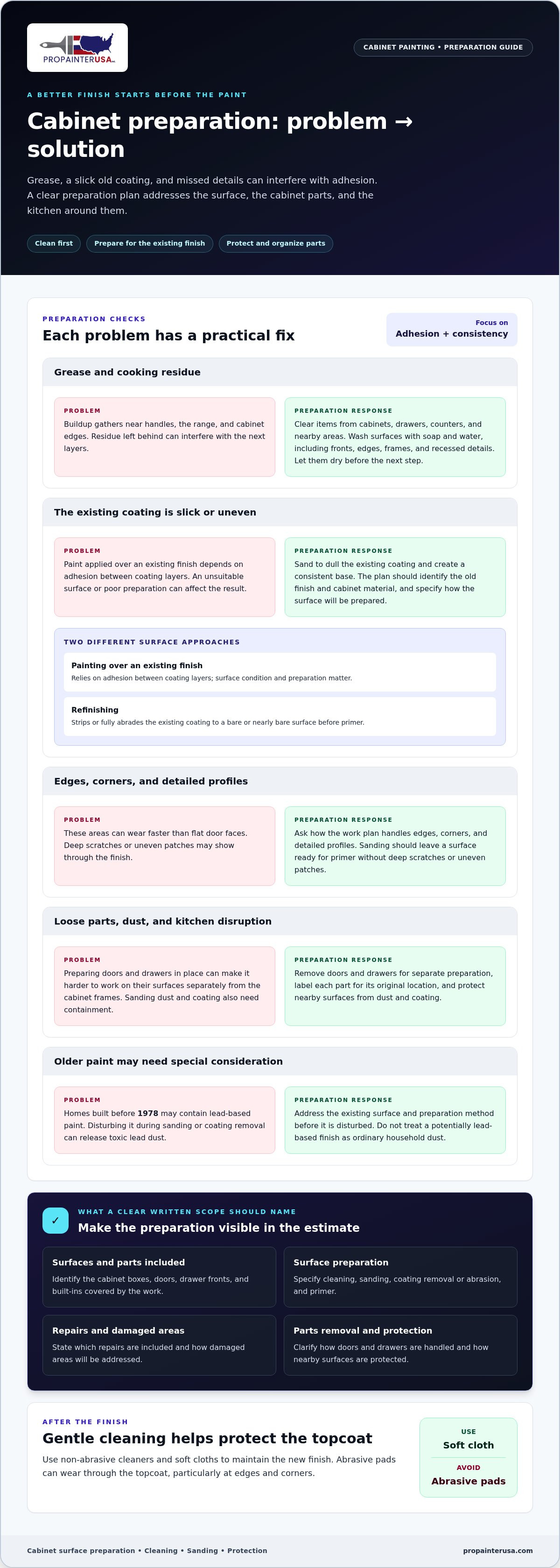
Paint adhesion depends on more than the coating: grease, dust, and a slick finish can interfere with the new surface. A careful preparation plan covers cleaning, sanding, cabinet parts, and protection for the kitchen.
Cooking residue gathers near handles, the range, and cabinet edges, where hands and airborne grease make surfaces harder to coat. Thorough degreasing removes this buildup before sanding or primer, helping the next layers adhere to the cabinet rather than contaminants. Home Depot advises removing belongings from cabinets, drawers, counters, and nearby areas, then washing cabinets and frames with soap and water before painting.
Check that cleaning covers door fronts, edges, frames, and recessed details, not just broad, flat panels. Surfaces need to dry after washing and before the next preparation step. Residue left in corners or around hardware can undermine an otherwise careful finish, so the work plan should account for those areas.
Sanding prepares cabinet surfaces for a new finish by dulling the existing coating and creating a consistent base. The approach depends on the old finish and cabinet material. Painting over an existing coating relies on adhesion between layers, while refinishing strips or fully abrades the old coating to a bare or nearly bare surface before primer.
Ask which process the project requires and how edges, corners, and detailed profiles will be handled. These areas can wear faster than flat door faces, especially where handling exposes the substrate. Sanding should leave a surface ready for primer, not deep scratches or uneven patches that show through the finish.
Before work begins, clear items from cupboards, drawers, counters, and nearby areas. Removing cabinet doors and drawers makes it easier to prepare their surfaces separately from the frames. Label each part to keep doors and drawers organized for reinstallation in their original locations. Protect adjacent surfaces from sanding dust and coating.
Homes built before 1978 may contain lead-based paint, and disturbing it can release toxic lead dust. That possibility matters during sanding or coating removal, so avoid treating an older finish as ordinary household dust. The work plan should address the existing surface and the preparation method before it is disturbed.
After preparation, use non-abrasive cleaners and soft cloths to maintain the new finish; abrasive pads can wear through the topcoat, particularly at edges and corners. A clear scope should identify cleaning, sanding, parts removal, and protection. For help with the broader painting work in a home, residential interior painting is a related service.
A useful comparison starts with your cabinets’ condition and the result you want. Separate the cost of changing their appearance from the broader work of replacing cabinets or changing the kitchen layout.
Cabinet painting or refinishing preserves existing boxes and the current layout, while replacement involves removing and installing cabinetry. That affects the work involved, not just the appearance. If the boxes are sound and storage works, refinishing may renew worn finishes without a full remodel. If water damage or a layout problem affects function, replacement may better suit the project.
Compare proposals by their full scope rather than treating every “cabinet painting” estimate as the same service. One may include doors, drawer fronts, frames, surface repairs, and new coatings; another may cover fewer areas. The project price depends on the case and is given after a quote request. Cabinet quantity, surface damage, and detail influence the work and estimate.
A consultation helps connect the estimate to your actual kitchen. Identify which doors, drawer fronts, frames, and built-ins you want included. Point out peeling finishes, damaged edges, or doors that don’t close properly. These details clarify the scope and help distinguish cosmetic painting from repairs or replacement work.
Compare written quotes line by line. Look for the surfaces included, preparation steps, repairs, primer, finish coats, and whether doors and drawers are handled separately. If one estimate omits a step, its lower total may reflect a narrower scope rather than better value. Clear descriptions make the differences easier to understand.
Use the same checklist for each proposal, then compare the answers with your priorities:
Does the proposed approach suit the existing boxes, doors, and finish?
Are frames, drawer fronts, repairs, and built-ins listed?
Does the scope describe cleaning, sanding, and priming?
Does it identify the coating and how the work will be applied?
Does the estimate distinguish refinishing from replacement or layout changes?
For a beautiful result that suits daily use, consider the condition of high-contact edges, handles, and doors, not only broad cabinet faces. The proposed finish should suit the surfaces being coated and the wear they receive. Compare how each estimate addresses these details instead of relying on a general promise of durability.
Finally, match the recommendation to your goal. Keeping a functional layout favors evaluating refinishing; needing new storage or a different arrangement points toward a broader remodel. A scope that clearly explains what will be painted, repaired, or replaced helps Milwaukee homeowners compare options on a like-for-like basis.
Cabinet doors and drawer fronts can be finished at home or separately in a controlled work area. The choice affects the application setup, dust management, and how parts are organized before returning to their original positions.
Yes, kitchen cabinets can be painted without removing the doors. However, detached doors can be laid flat for finishing, helping prevent sag marks. Painters typically remove doors and drawers to work on them separately from cabinet frames.
Before removal, agree on which parts are included: door fronts, backs, drawer fronts, frames, and exposed cabinet sides. Photograph each cabinet and label doors, drawers, and hardware by location to keep components matched during reinstallation. Protect counters and nearby surfaces while the frames remain in the kitchen.
Hardware needs a clear plan, too. Handles and knobs can be removed to keep paint off and make edges easier to coat. Hinges may also be removed with doors, depending on the work method. Keep each set of screws and fittings with its cabinet location instead of mixing pieces from different doors.
Painting frames on-site keeps fixed cabinetry in place, while detached doors and drawer fronts can be finished separately. Off-site finishing can minimize dust and disruption inside the home. A controlled environment also allows spray application, which can produce a smoother finish on flat door faces than brushing or rolling.
Ask how the proposal separates work on cabinet frames from work on removable parts. It should explain where doors will be finished, how they’ll be protected during transport if taken elsewhere, and how finished pieces will be organized for reinstallation. These details clarify the process without assuming every project uses the same setup.
Spraying is an application method, not a substitute for preparation. Doors still need suitable surface preparation before paint is applied, and frames need careful coverage around corners, openings, and hinge areas. A smooth face can look uneven if edges or profiles receive inconsistent coating, so review how the painter plans to treat flat and detailed areas.
Once painting is complete, doors and drawer fronts need to return to their original locations with the right hardware and parts. Check alignment, opening, and closing as the cabinetry is reassembled. For example, a labeled drawer front and its matching hardware should stay together, not be fitted to another drawer. Clear handling steps support a consistent appearance across the finished kitchen.
When comparing painting approaches, consider your priorities: attached doors avoid removal, while separate flat finishing can reduce sag marks and support smooth spray application. The scope should explain how doors, frames, drawers, and hardware are handled from preparation through reinstallation.
Searching for an independent painter in Milwaukee can surface businesses with different specialties and project approaches. Compare the work process, communication, and written scope, not just the finish shown in a photo. A beautiful cabinet update depends on details such as surface condition, preparation, and how each door is handled.
Start by describing your kitchen clearly. Note whether the work includes cabinet frames, doors, drawer fronts, pantry built-ins, or only selected areas. Mention peeling coating, worn edges, or water damage, and explain whether you want to keep the existing layout. These specifics help a painter assess the project and describe a suitable approach.
Review how the painter explains preparation. A useful proposal identifies cleaning, sanding, primer, and finish coats, as well as how damaged surfaces will be addressed. Primer supports adhesion between the prepared cabinet surface and the topcoat. Look for a scope that names the steps rather than relying on broad phrases such as “complete cabinet update.”
Examples and photos can help you assess workmanship, but look closely at the details. Examine door edges, corners, recessed profiles, and areas around hinges. A smooth flat panel is only one part of the result. Ask how the written scope accounts for frames and drawer fronts, and how removed doors are organized for separate finishing.
Communication is another practical measure. A painter should be able to explain what the quote includes, what preparation happens first, and how the kitchen will be protected during work. Clear answers help you compare proposals fairly. If two estimates describe different surfaces or preparation steps, they aren’t equivalent even if both say “cabinet painting.”
Match the listed doors, frames, drawers, and built-ins to your requested update.
Look for cleaning, sanding, repairs, and primer in the described process.
Review examples for consistent coverage on edges, profiles, and corners.
Compare how clearly the painter explains the sequence and project boundaries.
Use these points to select a painter whose process fits your cabinets and priorities, rather than choosing on appearance alone. If you’re planning a home painting update, explore residential interior painting as part of the project.
Pro Painter USA provides residential interior painting for homeowners planning a refreshed living space. If your kitchen update includes painting beyond the cabinet surfaces, this service can support broader improvements to the room. A clear project scope distinguishes cabinet refinishing from painting other kitchen surfaces, giving each part of the work a defined purpose.
Consider residential interior painting when your plans include walls or other interior surfaces alongside the cabinet update. Pro Painter USA also provides residential exterior painting and commercial interior and exterior painting for other property projects.
For help with your interior painting plans, contact Pro Painter USA.
A refreshed kitchen can shape how the whole home feels, so consider how a cabinet update will work with the room’s walls, trim, and adjoining spaces. If your search for kitchen cabinet painting near me has brought you to a decision point, set a clear goal for the finished room before planning broader painting work. That direction can help keep the project cohesive, whether you’re updating one space or several areas of your home.
Pro Painter USA offers residential interior painting for home updates, along with residential exterior painting and commercial interior painting. If your plans extend beyond the cabinets to other interior painting needs, these services may be a natural next step. Share what you’d like to change and discuss the painting work that fits your property.
Contact Pro Painter USA today to discuss your painting plans, and take the next step toward a kitchen that feels more like home.
Solid wood, MDF, and plywood cabinets can be refinished when their surfaces are sound. Laminate can also be painted if it’s in good condition. Thermofoil needs closer assessment, especially if its covering is lifting, because paint may fail where the surface separates. For example, peeling edges on a thermofoil door need attention before coating. Material and condition determine the preparation required.
Your kitchen’s usable space during the project depends on the scope and how work is organized. If doors and drawer fronts are removed, plan for limited access to those storage areas while they’re being finished. Before work starts, set aside essentials such as dishes, cookware, and everyday food items, and clear the counters. Ask about the work sequence so you can plan meals around areas that are temporarily unavailable.
Edges receive more contact during everyday handling and can expose more substrate than broad, flat surfaces. A cabinet door’s corners and handle area are touched repeatedly, while flat panels see less direct wear. MDF edges can be particularly vulnerable because the substrate is exposed. Inspect corners, lower edges, and areas near pulls for early wear, then clean them gently to avoid damaging the remaining topcoat.
Milwaukee homeowners can consider Pro Painter USA for cabinet painting as part of its painting services. Its local service area includes Milwaukee and nearby communities such as Shorewood, Whitefish Bay, Glendale, Fox Point, Bay View, Wauwatosa, Menomonee Falls, and Oak Creek. If you’re searching for kitchen cabinet painting near me, describe your cabinets and the finish you want to define a scope for your kitchen.
There isn’t one price for every Milwaukee kitchen; the project price depends on the case and is provided after a quote request. The amount of cabinetry, surface damage, and level of detail affect the work involved. For example, detailed doors or areas needing repair can require more preparation than simple, flat fronts. A clear estimate should define which cabinet parts and preparation steps are included.
Pricing can reflect the amount of cabinetry and the work each surface needs, rather than one universal unit. A door-by-door count helps define how many removable parts are included; a kitchen-wide scope can also cover frames and built-ins. Damage and decorative detail affect preparation needs. Compare estimates by matching the listed surfaces and tasks, so a smaller scope isn’t mistaken for a lower price for identical work.
A professional scope generally describes cleaning, surface preparation, primer, and finish application. It should identify whether doors, drawer fronts, frames, and exposed cabinet sides are included, along with any patching or surface repairs. For instance, an estimate covering door fronts alone differs from one covering both doors and frames. Use the written description to understand what will be coated and which parts will remain untouched.
A large cabinet painting project can take a week or more from preparation through completion; painting a single shelving unit or small bank of cabinets may take a few days. Curing time is separate from the work schedule and depends on the coating used. Follow the coating’s care instructions before cleaning or placing items against freshly painted surfaces, since early contact can mark a finish that hasn’t fully hardened.
You might find these helpful:
We are a team of interior and exterior painters and we are not limited to house painting only. We can paint different businesses like retail shops, commercial buildings, and apartments.
We also provide restaurant painting services. We can give you more information about these services if you give us a call.


